Visit Tokyo Disneyland with a Disability Access Service
Affiliate Disclosure: This post may contain affiliate links. If you click on these links and make a purchase, I may earn a small commission at no additional cost to you. These commissions help support the maintenance of this blog and allow me to continue providing valuable content to my readers. Thank you for your support! Please read my Privacy Policy for details.
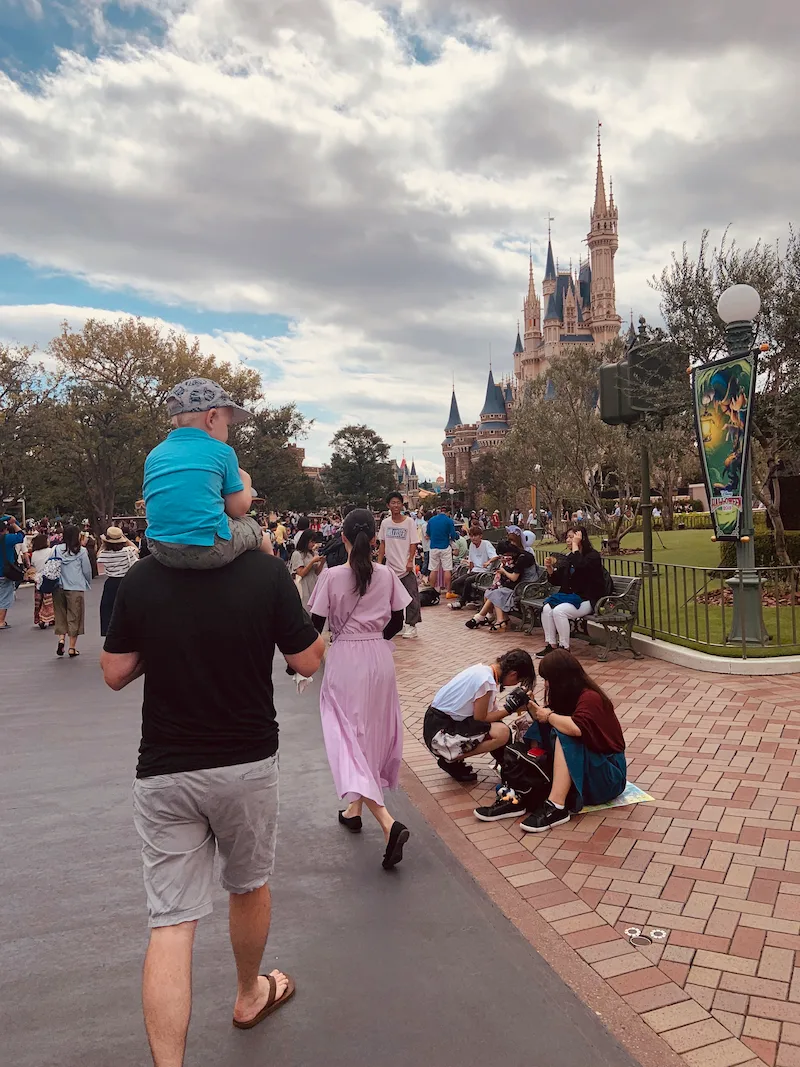
If you’re planning to visit Tokyo Disneyland with a Disability Access Service pass, here’s what you can expect on the day, how to apply and how to use it.
Table of Contents
Tokyo Disneyland & Disability Access Service
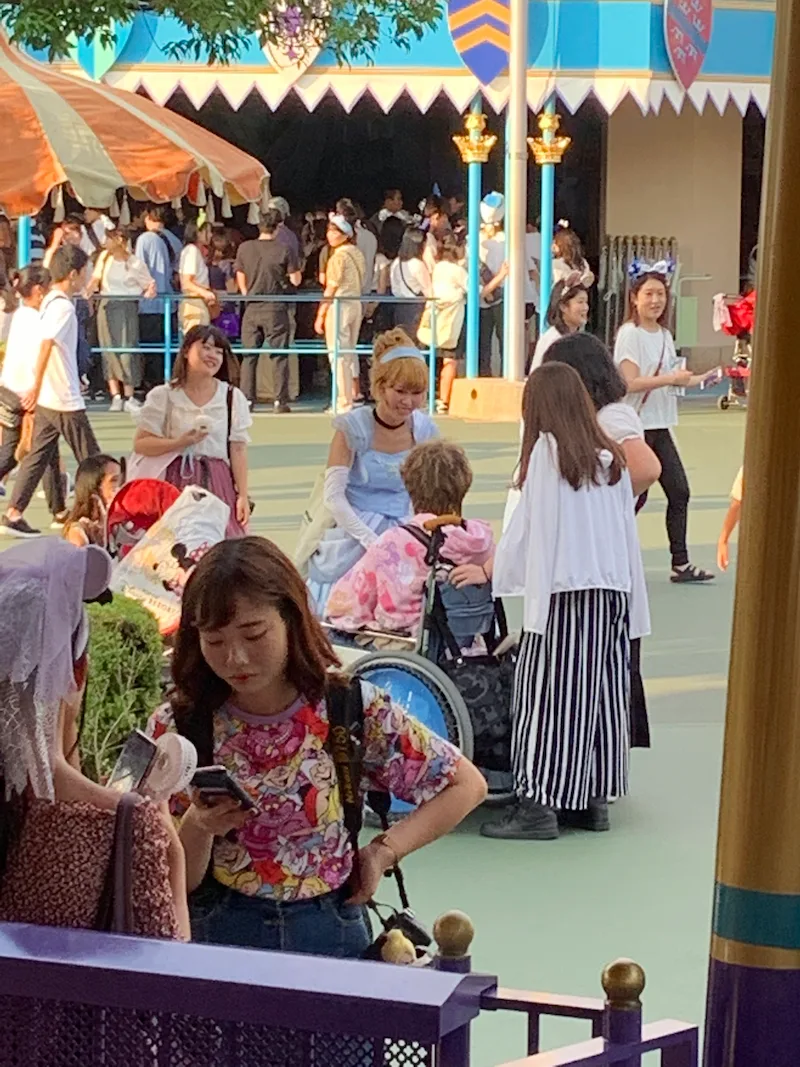
Disneyland accommodate visitors with additional needs by offering a Disability Access Service to guests who may need a little extra assistance to enjoy the fun. Tokyo Disneyland accommodates guests with visual, auditory, physical/ mobility and neurological disabilities. This includes guests using wheelchairs, and those with mobility requirements; visual and hearing disabilities; and developmental or neurological disabilities. For more specific information, the Tokyo Disneyland website has a breakdown of specific supports that can be accessed, including guests with temporary disabilities.
2026 Update: Important Changes to Tokyo Disneyland’s Disability Access System
It’s been a few years since our visit to Tokyo Disneyland and DisneySea, and while the park remains one of the most disability inclusive theme park destinations in the world, there are some important changes to be aware of before you go.
The pass has been renamed and is now officially called the Disability Access Service (DAS). The name is different but the core purpose remains the same, supporting guests who have difficulty waiting in standard queues due to developmental, neurological, sensory or physical disabilities.
Registration now happens at your first ride Registration now takes place at the first attraction you wish to use the service for. The Guest Relations desks are still available if you need broader assistance or have complex needs, but the initial registration process has moved to the individual rides.
There are now two separate services based on support needs:
- Disability Access Service (DAS) – for guests with developmental, neurological, sensory or physical disabilities who have difficulty standing in queues for extended periods. This is the service we used and that most of this post covers.
- Separate Wait Service – for guests with temporary conditions such as a broken leg, late-stage pregnancy or recent surgery, where the rest of the travelling party waits in the standard queue while the guest with a temporary condition waits separately.
If you’re visiting with a child with sensory or neurological needs, DAS is the service you want. The Separate Wait Service is designed for a different situation entirely, so it’s worth understanding the distinction before you arrive.
If you’ve been researching disability access at Disney parks, you may be aware of controversy surrounding changes Disney made to its DAS program at US parks in 2024. For a full comparison of Tokyo vs US Disney disability policies, see our overview post: Tokyo Disneyland Disability Access: The Inclusive Disney alternative in 2026.
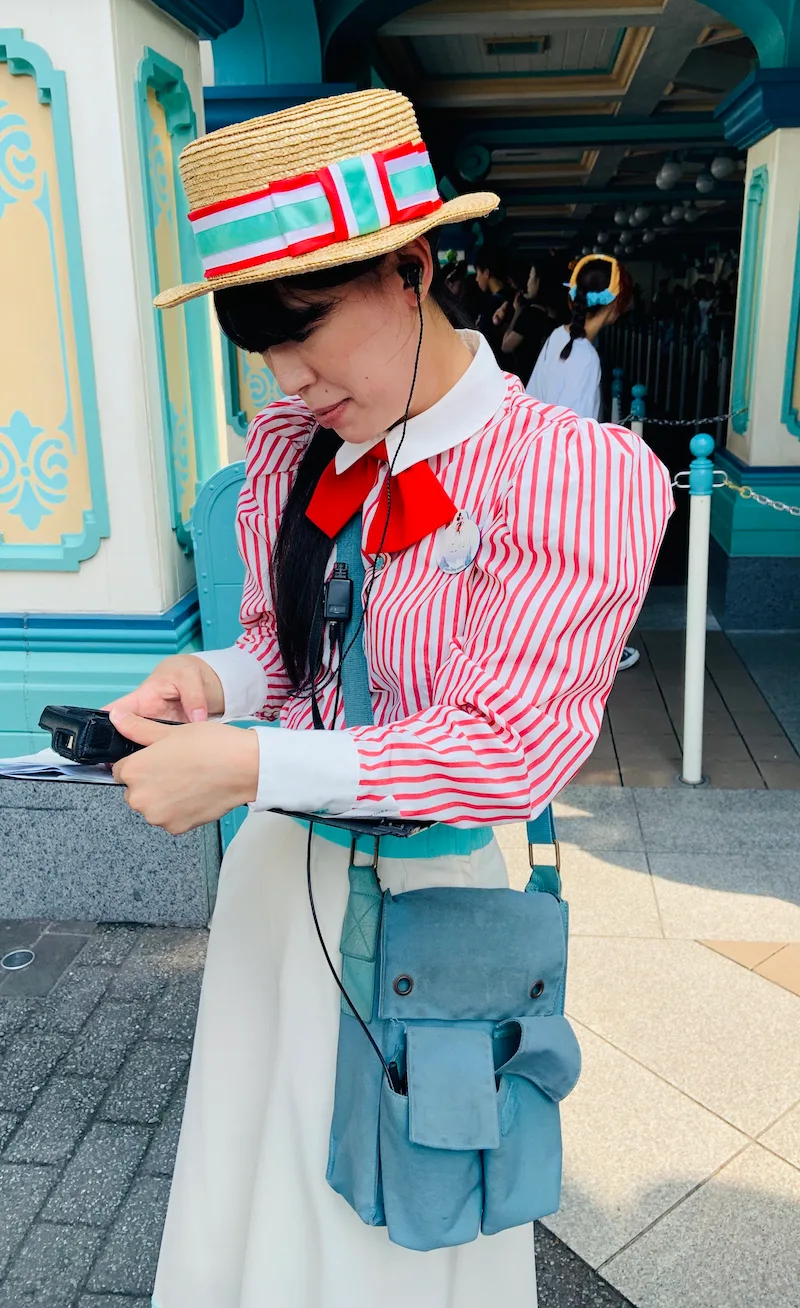
To apply for the Disability Access Service, simply register at the first attraction you wish to enjoy with original documentation. For more on requirements based on country of origin read Tokyo Disneyland Disability Access: The Inclusive Disney alternative in 2026.
DAS Wait Service
Visitors to Tokyo Disneyland with a disability should know the Disability Access Service does not allow guests to skip to the front of the line; as was the case in the past. But it does help to avoid lengthy wait times spent in queues. In fact, in some cases the wait could be longer. But for guests who find waiting in lines and being in crowded places difficult, the pass is a huge help. It also allows guests with mobility difficulties safe access to eligible rides.
Using a stroller as a wheelchair
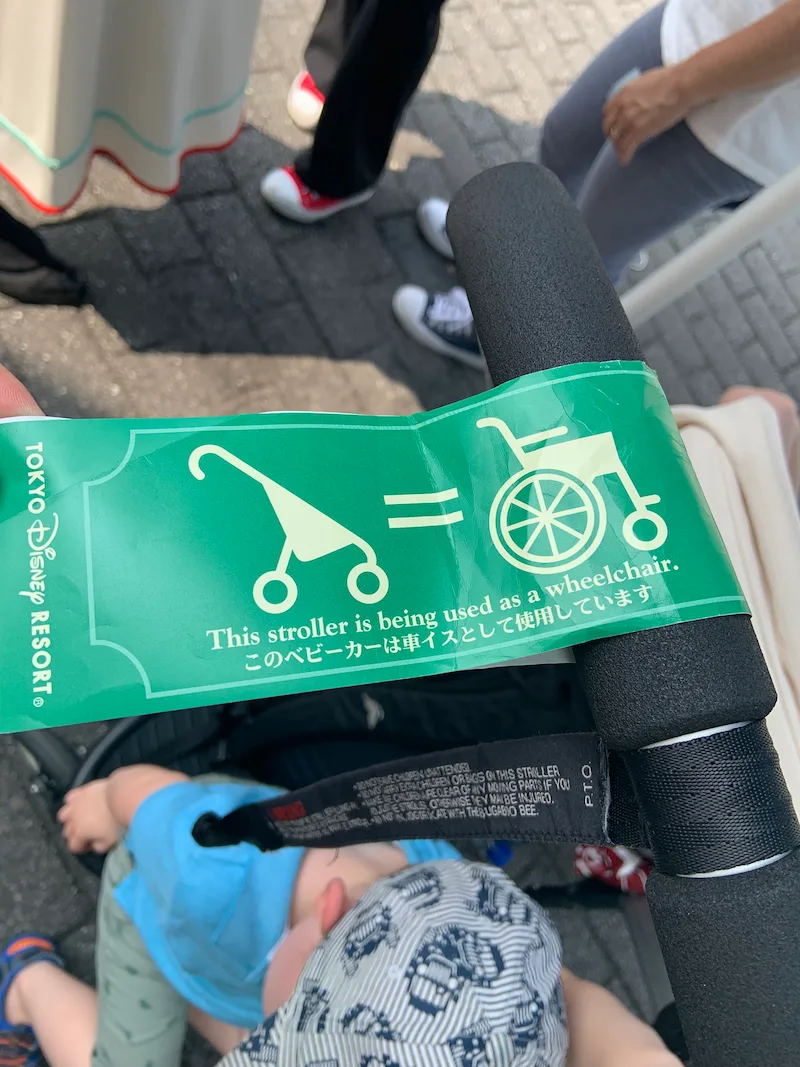
Strollers are eligible for use as a wheelchair. Request a sticker to alert staff that the stroller is being used as a wheel chair. We occasionally took our stroller further into the ride than is usually allowed to reduce standing time. We didn’t always do this, but sometimes it was necessary. The staff then transferred our stroller to the end of the ride.
Managing the language barrier
Overall, we were very well supported by staff at Tokyo Disneyland. However, there were a few glitches. Hopefully our experience can save others the same trouble.
The Disability Access Service isn’t a physical ticket, but data added electronically to your standard entrance ticket. Many staff members only spoke a small amount of English and we don’t speak Japanese. Explaining that we had a Disability Access Service and what our needs were with individual staff throughout the park was difficult.
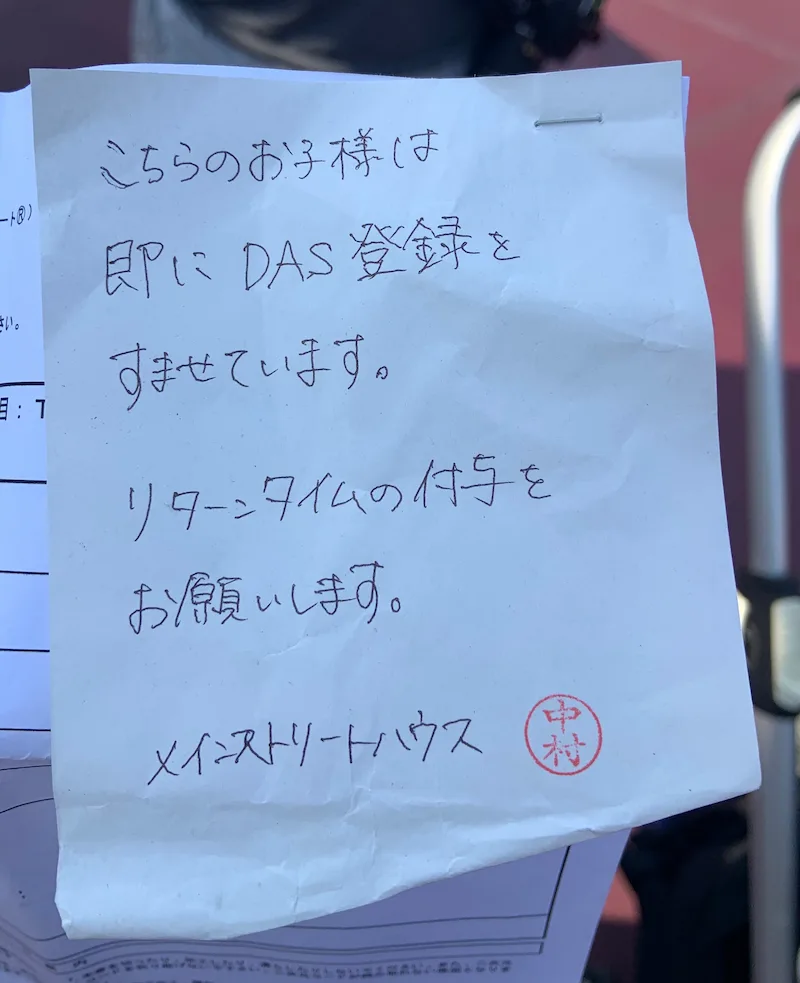
After frequent and lengthy attempts trying to navigate the language barrier, we returned to the Main Street House and explained the difficulty we were having. A staff member there translated a little note for us in Japanese. It said “We have a Disability Access Service and need to avoid waiting in a queue, can you please give us a return time.” We handed this note to staff at rides afterwards and had no further problems.
The DAS return pass
When getting a return pass, our groups entrance tickets were scanned and we were given a pass and told to return at a specific time. It was usually the same amount of time we would have spent in the queue.
We could spend this time browsing in shops, having a bite to eat, or go somewhere quiet for a sensory break. Sometimes we were able to go on rides with short queues, like the Carousel or catch a parade. We only used the pass for rides where wait times exceeded 30 minutes. It’s essentially like a Fast Pass, and like a Fast Pass you can only use it for one ride at a time.
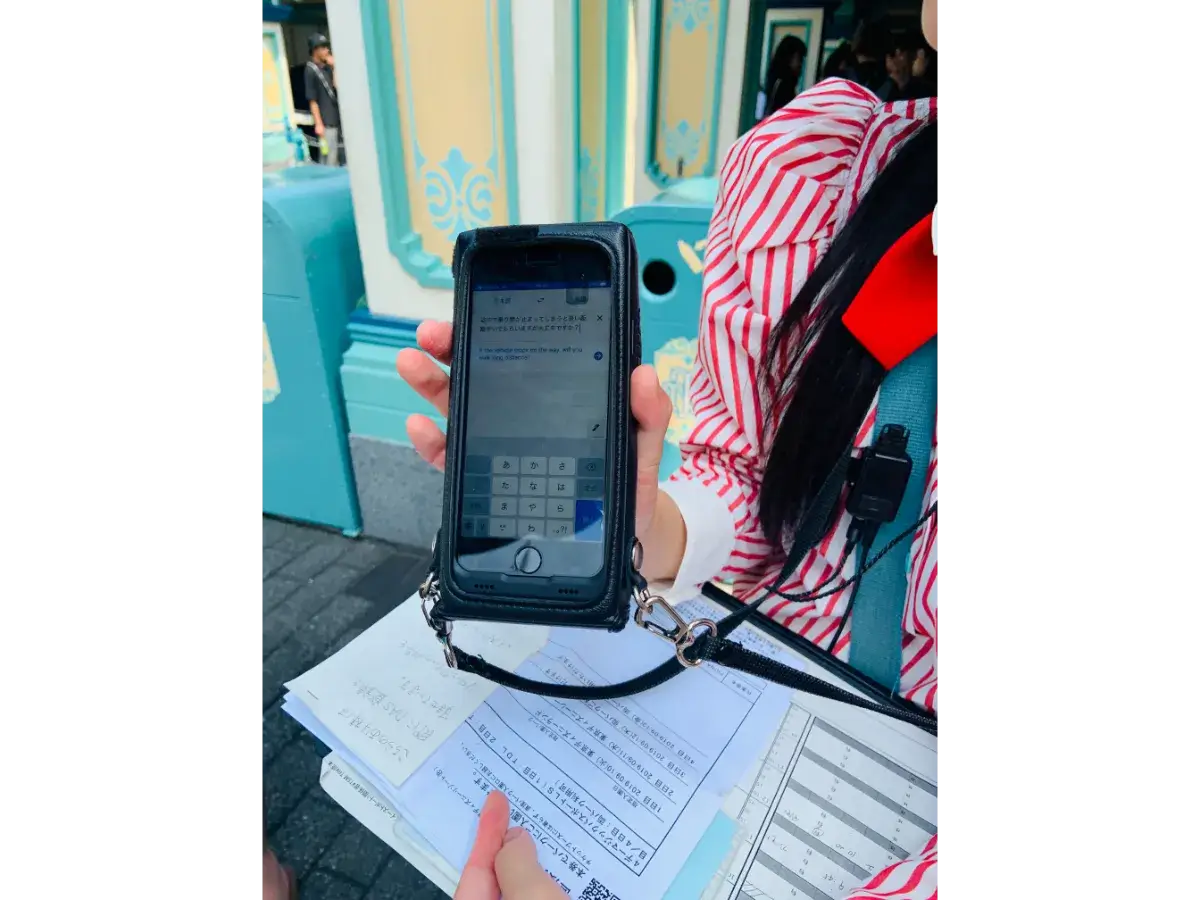
Sometimes the staff would need to ascertain that it was safe for us to go on the ride. Where necessary they used a translator device to ask questions in different languages. Some of the things they asked were: If there’s an emergency you may need to get out and walk. Is this OK? Can you walk for 5 minutes? We often had to repeat this step when we returned to go on the ride.
When it was time to go on the ride, we entered through the Fast Pass entrance and provided our return time pass and all our entrance tickets. We often had to scan in the fast pass scanners once or twice before getting on the ride.
For hotel recommendations near the parks, see our planning guide: Tokyo Disneyland Disability Access: The Inclusive Disney alternative in 2026.
Tokyo Disneyland has a Disneyland hotel just outside the entrance gates & is the best option for accommodation if proximity to Tokyo Disneyland is a priority.
We stayed at the Hilton Tokyo Bay. Hilton Tokyo Bay is one of several hotels in Maihama that are linked to Tokyo Disneyland & DisneySea via the Disney Resort line monorail. We used the stroller-friendly, free shuttle bus from Hilton Tokyo Bay to get to the monorail station.
Getting around the resort
Travelling around Japan is so easy with public transport and the Japan Rail Pass is a worthwhile investment. You can use the JR Pass to travel from Tokyo Station to Maihama Station in 15 minutes. From here the Disney Resort Line monorail has cast members ready to assist at stations. The monorail loops four stations: Disneyland, DisneySea, Resort Gateway Station and Bayside Station every 13 minutes, making it easy to travel between parks and return to your hotel for rest breaks during the day. For this reason we found a day pass is worthwhile as it allowed us to return to the hotel for breaks and return later in the day.
There are lifts in all the monorail stations and wheelchair spaces in the third and fourth car of the monorail for visitors to Tokyo Disneyland with a disability. Priority seats were available in every car. Guests in a wheelchair can request a portable ramp from a staff member, to assist in crossing the gap from the platform to the monorail.
Visiting Tokyo Disneyland with a disability for an inclusive vacation!
The Disability Access Service allowed our family to visit Tokyo Disneyland with a disability and enjoy an inclusive vacation. For guests who struggle to stand for long periods of time, have difficulty waiting and being in crowded places, or require assisted access to the rides; the Disability Access Service will support your visit to Tokyo Disneyland and ensure you don’t miss out on the fun.
Thanks to all the staff who assisted us during our visit! We wish those who seek to visit Tokyo Disneyland with a disability, an inclusive stay.
1 thought on “Visit Tokyo Disneyland with a Disability Access Service”