Your guide to hike the Cape to Cape Walk Independently: WA’s incredible coastal trail
Affiliate Disclosure: This post may contain affiliate links. If you click on these links and make a purchase, I may earn a small commission at no additional cost to you. These commissions help support the maintenance of this blog and allow me to continue providing valuable content to my readers. Thank you for your support! Please read my Privacy Policy for details.
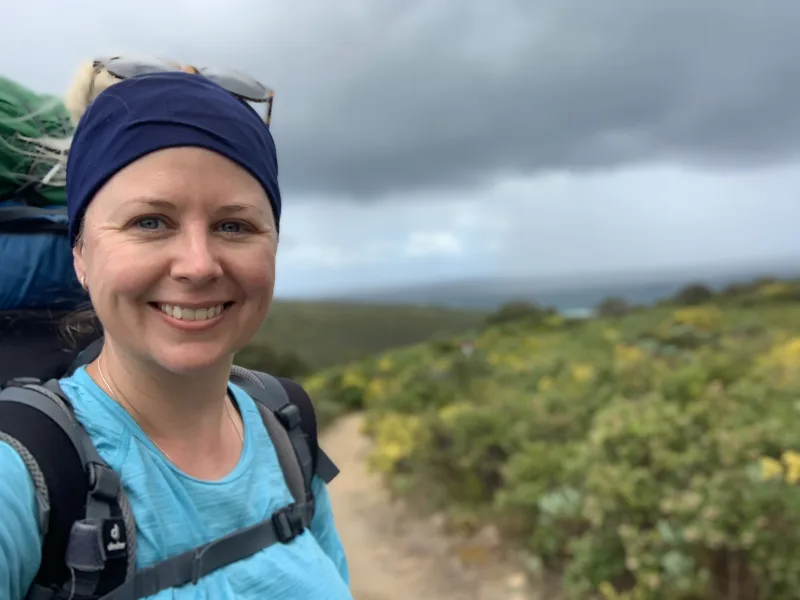
Table of Contents
Hiking the Cape to Cape walk independently is an incredible experience. The Cape to Cape is a 135km trek in coastal Western Australia between the Cape Naturaliste and Cape Leeuwin lighthouses. People often ask if the hike needs to be completed with a tour or guide, and the simple answer is, no. A large number of people hike the Cape to Cape walk independently every year. The trail lends itself to solo and self-guided hiking and frequently cuts through small country towns, so you’re never far away from somewhere to stock up on supplies if needed.
Hike the Cape to Cape trail without a guide
The trail is about a 3 and a half hour drive south of Perth. Hikers completing a thru-hike can expect to spend 5 to 8 days on the trail and there are numerous ways to complete the trek. Camp, plan an itinerary around the numerous towns and stay in accommodation, rent a house for the week and get dropped off / picked up each day. Alternatively you can complete the trail over a longer period of time in small sections and day walks. There are tour groups who offer guided walks, or you can go it alone.
With so many options, there’s a version of the Cape to Cape to suit all hikers, including a 3.7km section between Cape Naturaliste lighthouse and Sugarloaf Rock carpark that is wheelchair, gopher and stroller friendly. We hiked the Cape to Cape walk independently over 6 days, staying at both free and paid campsites, with a one night stay in a cabin in Prevelly.
Read on for the itinerary we used hiking the Cape to Cape walk independently: The Cape to Cape: a 6 day itinerary.
Difficulty
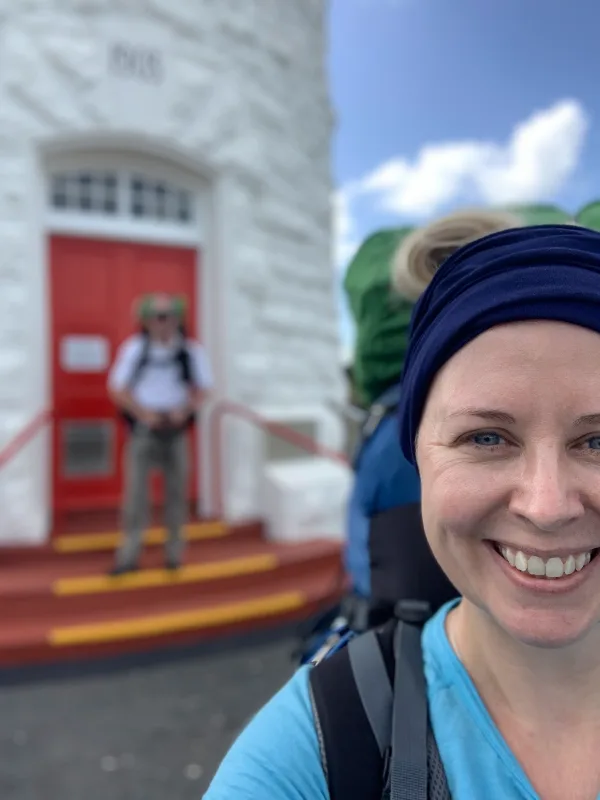
The Cape to Cape trail is not technically difficult and is suitable for experienced hikers with a moderate level of fitness. Completing the Cape to Cape trek without a guide involves carrying a full pack with tent, bedding and cooking supplies etc. Expect to hike approximately 20-25kms per day, carrying 10-15kg over a varied terrain, including soft beach sand, rocks, cliff tops, dirt trails and 4WD tracks. Preparation should include a fitness regime that reflects this. Walk at home, preferably carrying your full pack, as well as weight training.
There are some unique aspects of hiking the Cape to Cape walk independently to consider, including long stretches of soft beach sand (6-7kms), climbs up and down loose rock and river crossings. You should expect to get your feet wet most days.
It rained most days when we hiked the Cape to Cape in October which made sections of the trail slippery and a river crossing difficult. It’s worthwhile monitoring the weather forecast for strong winds on days you’ll cover the limestone clifftops and pass by the blow holes.
Planning to Hike the Cape to Cape Trail
When to go
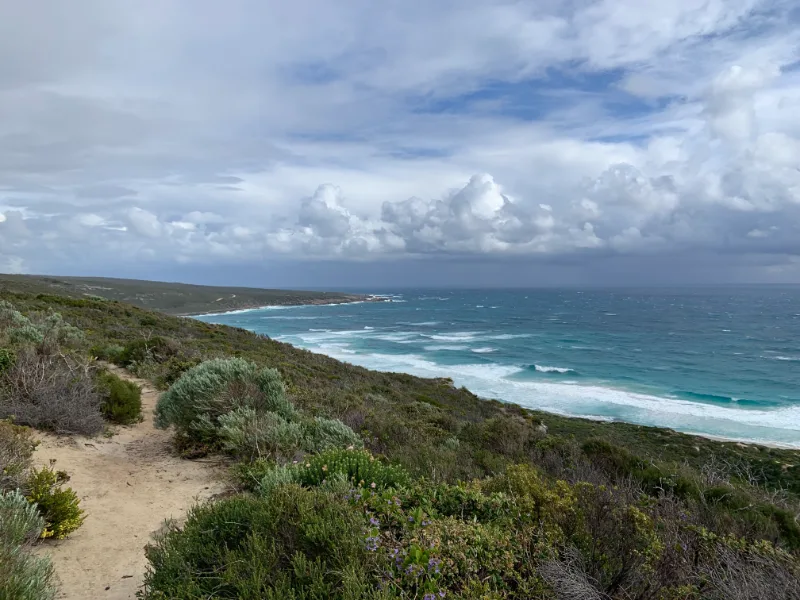
You can hike the Cape to Cape walk independently at any time of year, but the best time is Spring and early Autumn. The fast-moving & deep river crossings, slippery rocks, coastal winds and large waves during Winter mean extra considerations and preparations should be made. Ensure you take enough water during Summer and have adequate sun protection. Keep an eye on the Parks and Wildlife website for updates regarding diversions, alerts and conditions on the trail.
Whale migration
The southern whale migration occurs between August and November and if you’re lucky you might see some of the 35 000 whales migrating from Antarctica to warmer waters. Whales can be visible from the track, but if you want to get closer to the action, there are whale watching cruises from various locations in the region.
Wildflowers & bees
The wildflowers in Spring attract a lot of bees so bring an EpiPen if you experience severe bee allergies. You are likely to see snakes on the path, so tread carefully during Spring and Summer, the narrow sandy tracks are the perfect spot for snakes to sun themselves in the warmer months.
We hiked the Cape to Cape trail during October to avoid the heat of Summer and enjoy the wildflowers. It rained most days so make sure to pack wet weather gear. I also carried my clothes and sleeping bag in dry sacks inside my backpack which kept them dry on the trail.
Cape to Cape Walk Cost & Booking
One of the appeals of hiking the Cape to Cape independently is that it’s relatively affordable compared to other multi-day treks. There’s no permit required and no booking system for the trail itself you simply show up and start walking. Although it is recommended that you sign in before starting the trek as this will assist emergency services in the event of an emergency. The registration book is situated shortly after the start of the trail, near the lighthouse.
Trail access: Free. There is no permit, registration fee, or booking required to hike the Cape to Cape Track.
Campsites: Costs vary depending on where you stay each night.
| Campsite | Type | Cost (2026) |
| Mt Duckworth | Free (basic) | free |
| Moses Rock | Free (basic) | free |
| Ellensbrook | Free (basic) | free |
| Tasman Holiday Park– Yallingup | Powered/ unpowered sites, cabins | $$ |
| Prevelly Caravan Park | Sites + cabins | $$ |
| Conto’s Campground | DBCA managed | $ |
| Deepdene | Free (basic) | free |
Campsite prices are approximate and subject to change. Check Parks and Wildlife and individual parks for current rates.
The free campsites (Mt Duckworth, Moses Rock, Ellensbrook, Deepdene) are managed by DBCA and require no booking, it’s first in, best dressed. They have basic facilities: a composting toilet and water tank. We never had trouble finding space, but the trail gets busier during school holidays and long weekends, particularly in spring.
Conto’s Campground is the one fee-paying DBCA campsite directly on the trail and can be booked in advance through the DBCA booking system. It’s worth pre-booking, especially during peak season. It’s one of the more comfortable spots on the trail with undercover cooking facilities, which you’ll appreciate if the weather rolls in.
Total estimated cost for a 6-day thru-hike (2 people, mix of free and paid campsites):
| Item | Estimated cost |
| Campsites (mix of free + paid) | $100 – $180 |
| Food & supplies on the trail | $100 – $150 |
| Transport (taxi + TransWA bus) | $80 – $120 (approx) |
| Cape Naturalist Lighthouse entry (optional) | $20 / per person |
| Cape Leeuwin Lighthouse entry (free entry for thru-hikers) | Free |
| Total (approx. per person) | $200 – $350 |
Food costs depend heavily on how much you resupply at trail towns versus carry from home. Buying dehydrated meals and snacks before you leave Perth is significantly cheaper than purchasing on the trail. See the packing section below for food suggestions.
Guided tours are available if you’d prefer not to go it alone. Fees for commercial operators vary based on whether the trip is fully guided, catered experience and accommodation.
Cape Leeuwin lighthouse: Thru-hikers completing the full Cape to Cape track do not pay the standard lighthouse entrance fee. Let the staff know you’ve just completed the hike if they don’t make the assumption based on the state and smell of you. The visitors centre sells completion certificates, with proceeds supporting the Friends of the Cape to Cape.
For a detailed breakdown of campsites and distances by day, see the Cape to Cape 6 Day Itinerary.
Direction
Your options are North to South or vice versa. Cape Naturaliste to Cape Leeuwin (N to S) is more popular as you have the sun on your back. The southern end section is slightly more difficult, but completing it at the end of your trek means you’ll have the benefit of increased track fitness.
Getting there / Getting Away
Both Dunsborough and Augusta are serviced by public transport, so you can hike the Cape to Cape walk independently & without a car. Alternatively, arrange a lift for the beginning and / or end of the hike or those travelling in a group can leave a car at either end of the trail.
We drove to Cape Naturaliste and left our car in the public car park. This is permitted, but do so at your own risk and don’t leave valuables in your car. At the end of our hike, we took a taxi to Augusta and then caught public transport to Dunsborough. From there we took another taxi to Cape Naturaliste to collect our car and travel back to Perth.
Navigation
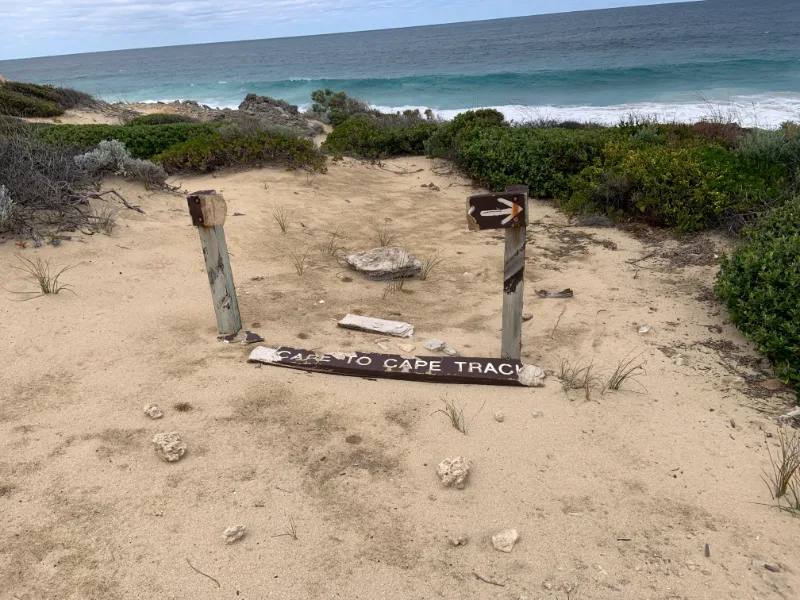
Despite solid attempts to sign post the trail, we frequently saw posts where the marker was missing or had been removed, making navigation difficult at times. We read the Cape to Cape Walk guidebook before hand and used the Cape to Cape app and the Walk the Cape to Cape track map. This helped us to get back on track when we strayed from the trail. It’s worth downloading both the app and having a hard copy of the map as phone reception is patchy along some sections. Many campsites along the trail don’t have power so you wont be able to charge your devices. Bring a powerbank if you’re relying on apps or online maps.
Water
All the campsites we visited had a water tank, but there’s no guarantee they will be reliable, and there were times when we passed through towns and weren’t able to top up our water. Some places used bore water or cafe’s refused requests for water refills. Aim to carry approximately 4 litres per person, per day if you are staying overnight, and boil all water sourced from water tanks prior to drinking.
What to pack
Gear
| Item | Description |
| Hiking Pack (55-75L) | Large enough for an ultralight hiking tent, sleeping bag and 6 days of food |
| Dry sack | Or plastic bag / zip lock bags to keep sleeping bag, food and clothes etc dry |
| Bedding (ultralight) | Hiking mattress, pillow, tent, sleeping bag – ultralight if its within your budget |
| Cooking | CamelBak, bowl, cup & spork. Jetboil & fuel – boils water fast for trail meals and sterilising water |
| Food & water | Approx 3-4 litres of water per day Meals & snacks (suggestions below) |
| Navigation | Maps, apps, GPS |
| Torch &/ headlamp | Headlamps are better for |
| LuminAID Solar Lantern | Lightweight solar powered lantern. Collapse and attach to your backpack to charge during the day. |
| Toothbrush & tooth paste, toilet paper, deodorant, sunscreen, mosquito repellant (all travel size) | |
| Travel towel | Micro fibre, quick dry towel |
| First Aid kit | thermal blanket, triangular bandage, bandaids, gauze, antiseptic, snake bite kit, ibuprofen |
| Gerber multi tool | Multi tool / pocket knife |
| Mobile phone & / personal location beacon | Check coverage with your telco before departure if taking a mobile phone & a power bank to charge devices |
| Hiking poles | Essential for steep descents, river crossings and reducing knee strain |
| Ziplock bags/ plastic bags to store rubbish until you finish | There are no rubbish bins on the trail, leave nothing behind but your footprints. |
| Gaiters | Keeps sand out of boots on beach sections, protects legs from scrub |
| Clothes pegs | to dry out your socks & clothes overnight |
You may also be interested in reading about my favourite hiking gear.
If you don’t usually trek with hiking poles, I suggest you give them a go on this trail. There are a lot of steep inclines and the poles will take some of the weight off your legs and help keep you balanced. They can also be used to feel out the depth of water during river crossings or used as a splint in case of emergency.
Gaiters are another worthwhile investment. Some of the trails are quite over-grown and the scrub will either cut your legs or tear your pants, and gaiters offer some protection. They also keep the sand from getting into your boots on the beach and dune sections. Keep your phone, camera, maps and guidebooks in zip lock bags to protect them from water.
Clothing
I packed and needed all of the following but the clothes you need may change dependent on the season. This was my packing list for Spring / early October.
- 6 x underwear (not cotton)
- 3 pairs of (merino) hiking socks (one to wear, one spare, one to sleep in)
- Hiking boots & gaiters
- 2 pairs of pants (1 for the day & 1 for camp / sleeping)
- 1 pair of shorts
- 3 (merino) t shirts (2 for the day & 1 for camp / sleeping)
- 2 (merino) long sleeve shirts (1 for the day & 1 for camp / sleeping)
- Puffer / down insulated jacket
- Rain jacket
- Cap & beanie
- Watch
- Sunglasses
- Camp shoes / thongs
- Buff / neck gaiter
Meals & Snacks
The following quantities are for two people.
- Dried fruit & nuts 500g
- Muesli bars x24
- Chocolate bars (fun size) x24
- Dehydrated soup (Continental Soup Sensations) x8
- Dehydrated ramen & pasta (2 person serving) x4
- Tea, coffee, sugar, powdered milk
- Hydralyte
- Beef jerky- here’s my recipe
Breakfast was typically coffee and 1-2 muesli bars. Lunch was 1-2 muesli bars unless we were passing through a town and bought something. Dinner was soup & / pasta, unless we were passing through a town with a restaurant. We ate trail mix and chocolate through the day for extra energy and Hydralyte to avoid dehydration.
Where to get food
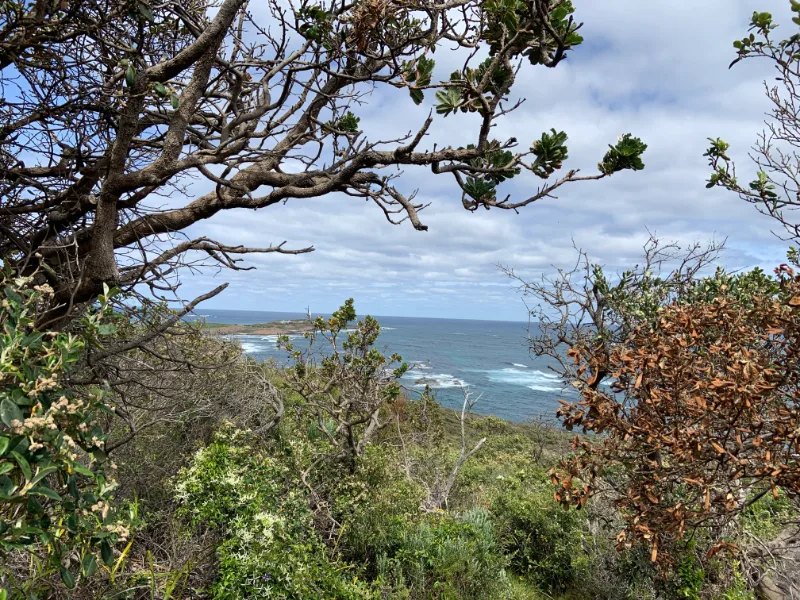
One of the perks of the Cape to Cape trail is that you hike through lots of costal towns where you can enjoy a hot meal, decent coffee and top up your supplies. Below is a list of places I was able to purchase food on the trail (North to South).
Yallingup
Our first night on the trail was camping at Tasman Holiday Park (Yallingup). From here it’s a ten minute walk to the Caves House Hotel where you can buy a hot meal and a cold beer. What better way to celebrate your first night of the trek! Next to the Caves House Hotel is the Yallingup General Store and Cafe where you can get a hearty breakfast and coffee before you return to the trail.
Gracetown
As you come off the beach, Gracies General Store is just off the trail on Bayview drive. They sell pastries, sweets, coffees, pies and sandwiches and was a popular lunch spot for fellow Cape to Cape hikers to swap stories when we passed through.
Prevelly
We stayed at the Prevelly Caravan Park and the reception office where you check-in doubles as a general store that sells food, drinks and fresh sandwiches. Next to the caravan park is the Sea Garden Cafe which is open for breakfast, lunch and dinner & offers take aways.
Hamelin Bay
The Cape to Cape passes Hamelin Bay Holiday Park. The general store on site sells basic pantry food as well as drinks and hot pies.
Cape Leeuwin
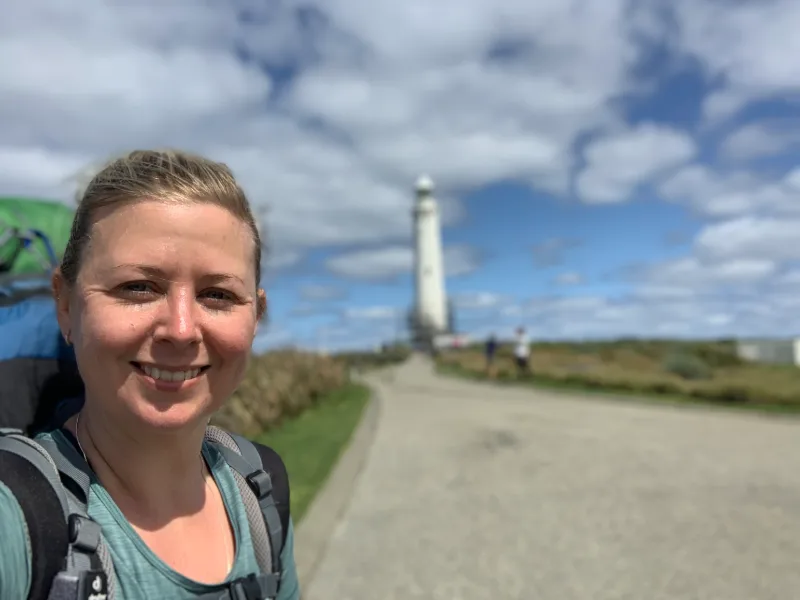
As you enter the Cape Leeuwin lighthouse you pass through a gift store and cafe. The scones are a house speciality.
The Margaret River mouth crossing
During Winter the Margaret River mouth is largely uncrossable and a diversion track is in place. But sudden rainfall at any time of year can make river crossings throughout the trail dangerous. Parks and Wildlife post regular updates regarding trail conditions.
Some hikers attempt the Margaret River crossing in Winter. Be aware that the water can move quickly and it’s often deep (chest high). Occasionally budding entrepreneurs set up a canoe service ferrying hikers across the river mouth but it can’t be relied upon.
It’s worthwhile checking out the Cape to Cape facebook group as the Margaret River crossing is a frequent topic of conversation, so you can get updates on the current state of the river to plan ahead. During my hike, the diversion was recommended by Parks and Wildlife, so we took it. Even if the water wasn’t chest high, carrying a 13kg pack above my head wasn’t going to happen. The diversion doesn’t add a significant distance to your hike, it’s just less scenic and you miss out on bragging rights. But if you decide to hike to the river mouth crossing then change your mind, you have to back track a fair way.
Injury Prevention
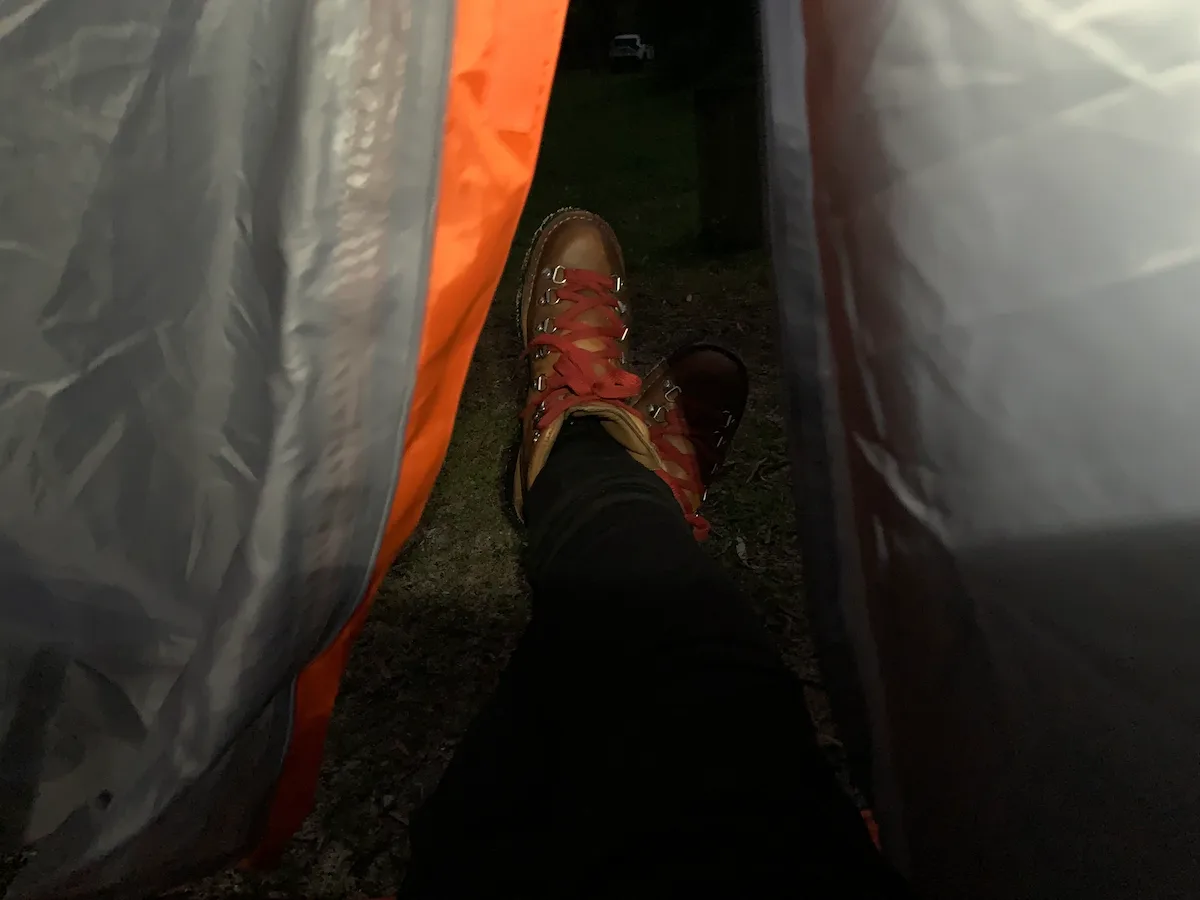
135km is a fair distance and your feet will take a battering. Ideally you’ll have broken in your hiking boots well in advance, but even that may not be enough to prevent injuries and blisters. Blisters are caused by friction and moisture, so keep your feet as dry as possible. Bring decent quality hiking socks, preferably merino wool. Have a rotation of socks (minimum of 2) so that if it rains and your feet get wet, you have a back up.
When you stop for lunch, take your shoes and socks off to let your feet dry out if you can. Merino socks often dry out quickly and more resistant to odour, so hang them up inside your tent at night and they should be good to go again in the morning.
As soon as you feel a hot spot or blister, treat it immediately. Fixomull tape or Compeed is perfect for blisters and can be cut to size. I had a nasty blister between my toes and although I was too late to prevent it, Fixomull kept it clean and stopped it from hurting as much.
Wear gaiters when you walk on the beach stretches and dunes to stop sand getting into your boots and be sure to brush off all the sand before putting your boots back on after river crossings. It doesn’t take long for small amount of sand to feel like sandpaper.
Walking on downhill tracks can cause your feet slide forward & hit the inside of your boot. Over time this repeated impact can cause blisters and bruised toenails. Use a surgeons knot to secure your laces at the top of your foot before lacing above the ankle. This will help to lock your heel in place and stop your feet sliding when you are walking down steep hills. Hiking poles can also help.
In case of emergency
Hiking the Cape to Cape walk independently requires having contingency plans in place for injury and emergency. Any prior injuries are liable to flare up on a multi day hike so visit your GP before your trek and if you have weak knees or ankles make sure to bring a brace or compression bandage. While there are several points along the trail that are accessible by car, it is ultimately a walk-only trail and so it’s important to honestly assess your capacity to continue in the event of an injury.
Familiarise yourself with locations that are accessible by car prior to departure so that you can make informed decisions on the trail if you get stuck. You don’t want to tough it out and push on to the next location, only to get stuck somewhere where a rescue lift is more difficult.
Read on for a 6 day itinerary on the Cape to Cape walk.
Frequently Asked Questions
Do you need a permit to hike the Cape to Cape Walk?
No permit is required to hike the Cape to Cape Track. The trail is free to access and there is no registration or booking system for the walk itself. The one exception is Conto’s Campground, which is a paid DBCA-managed campsite that can be booked in advance through the Parks and Wildlife booking system.
How long does the Cape to Cape Walk take?
Most hikers complete the Cape to Cape Walk in 5 to 8 days. A 7-day itinerary is the most popular as it allows for a comfortable daily distance of around 18-20km. Fit, experienced hikers have completed it in 5 days, while others prefer to stretch it to 8 to allow more time to explore the trail towns along the way. We completed it in 6 days, which involved two longer days of 30+ km.
How difficult is the Cape to Cape Walk?
The Cape to Cape Walk is graded moderate and is suitable for hikers with a reasonable level of fitness. It is not technically difficult, but the cumulative distance of 135km over 5–8 days carrying a full pack should not be underestimated. The most physically demanding sections include long stretches of soft beach sand, loose rock climbs and river crossings. Preparation should include regular walking with a loaded pack before the trip.
How much does it cost to hike the Cape to Cape Walk?
Hiking the Cape to Cape independently is relatively affordable. Budget approximately $150–$230 per person for a 6-day thru-hike, covering a mix of free and paid campsites, food resupply on the trail, and transport at the end. The trail itself is free to access and no permit is required. Guided tours are available for a fully catered, supported experience but expect to pay a premium.
Can you hike the Cape to Cape Walk without a guide?
Yes. The majority of people who hike the Cape to Cape do so independently, without a guide. The trail passes through several small towns, apps and maps are readily available, and the Parks and Wildlife website posts regular updates on conditions and diversions. A guided tour is an option for those who prefer a supported experience, but it is not necessary.
Can you hike the Cape to Cape Walk solo?
Yes, people hike the Cape to Cape solo regularly. The trail passes through populated towns, campsites are shared with other hikers and there are multiple car-accessible exit points along the route. That said, solo hikers should carry a personal locator beacon (PLB), have contingency plans in place for injury, and let someone know their itinerary before departure.
When is the best time to hike the Cape to Cape Walk?
Spring (September to November) and early Autumn (March to April) are the best times to hike the Cape to Cape. Spring brings wildflowers and the southern whale migration, though it can be wet. Autumn offers more stable weather and is generally quieter on the trail. Summer brings heat and sun exposure risks. Winter brings fast-moving river crossings, slippery trails and strong coastal winds that require extra caution and preparation.
Is the Cape to Cape Walk suitable for beginners?
The Cape to Cape Walk is best suited to hikers with some prior multi-day hiking experience. The daily distances, varied terrain and weight of a full pack make it challenging for complete beginners. If you are relatively new to hiking, consider completing the trail as a series of day walks or shorter sections over a longer period, or building up fitness and experience with shorter overnight hikes first.
Do you need to book campsites for the Cape to Cape Walk?
Most campsites on the Cape to Cape Walk are free DBCA-managed sites with no booking required, it’s first in, best dressed. Conto’s Campground is the exception and can be pre-booked. If you plan to spend a night in accommodation in Prevelly or Yallingup, book well in advance during school holidays and spring, when the trail is busiest. We booked our Prevelly cabin and Yallingup campsite ahead of time to secure a spot and a guaranteed shower.
What shoes should I wear for the Cape to Cape Walk?
Sturdy, waterproof hiking boots with ankle support are recommended for the Cape to Cape Walk. The trail includes loose rock, overgrown scrub, river crossings and long beach sections, so a boot that can handle varied terrain and wet conditions is important. Break your boots in thoroughly before the hike, blisters are one of the most common issues hikers encounter on the trail. Gaiters are also worth bringing to keep sand out of your boots on the beach sections.
Can you hike the Cape to Cape Walk with a dog?
Dogs are not permitted on the Cape to Cape Track. The trail passes through national parks and nature reserves where pets are prohibited under DBCA regulations.
Is there phone reception on the Cape to Cape Walk?
Mobile reception is patchy along sections of the Cape to Cape Walk, particularly between towns. You should not rely on your phone for navigation or emergency communication in remote sections. Download the Cape to Cape app and maps for offline use, carry a paper map as backup, and consider carrying a personal locator beacon (PLB) for emergency use in areas without coverage. Overall, Telstra has the best coverage outside of cities in WA, but check coverage maps before your train to confirm. Most campsites we stayed at were basic and did not have power, so bring power banks if you plan on using your phone on the trail.
What happens at the Margaret River crossing?
The Margaret River mouth crossing is one of the most talked-about sections of the trail. In Winter it is largely uncrossable and a diversion is in place. After heavy rainfall at any time of year the crossing can be chest-deep and fast-moving. Check the Parks and Wildlife alerts page and the Cape to Cape Facebook group for current conditions before you reach this section. If in doubt, take the diversion, it adds minimal distance and avoids a potentially dangerous crossing with a heavy pack.
Is the Cape to Cape Walk wheelchair accessible?
The Cape to Cape Walk is not wheelchair accessible as a whole. However, the first 3.7km section between Cape Naturaliste lighthouse and Sugarloaf Rock carpark is a paved, sealed trail suitable for wheelchairs, gophers and strollers. This section can be completed as a standalone accessible walk with beautiful coastal views.


