Breaking-in the iconic boots with the red laces: How good are Danner boots?
This is not a sponsored post, I purchased these hiking boots myself based on my own research. However, this post contains affiliate links. If you click on one of these links and then make a purchase from the linked advertiser site, I’ll make a commission at no extra cost to you. Please read my Privacy Policy for details.
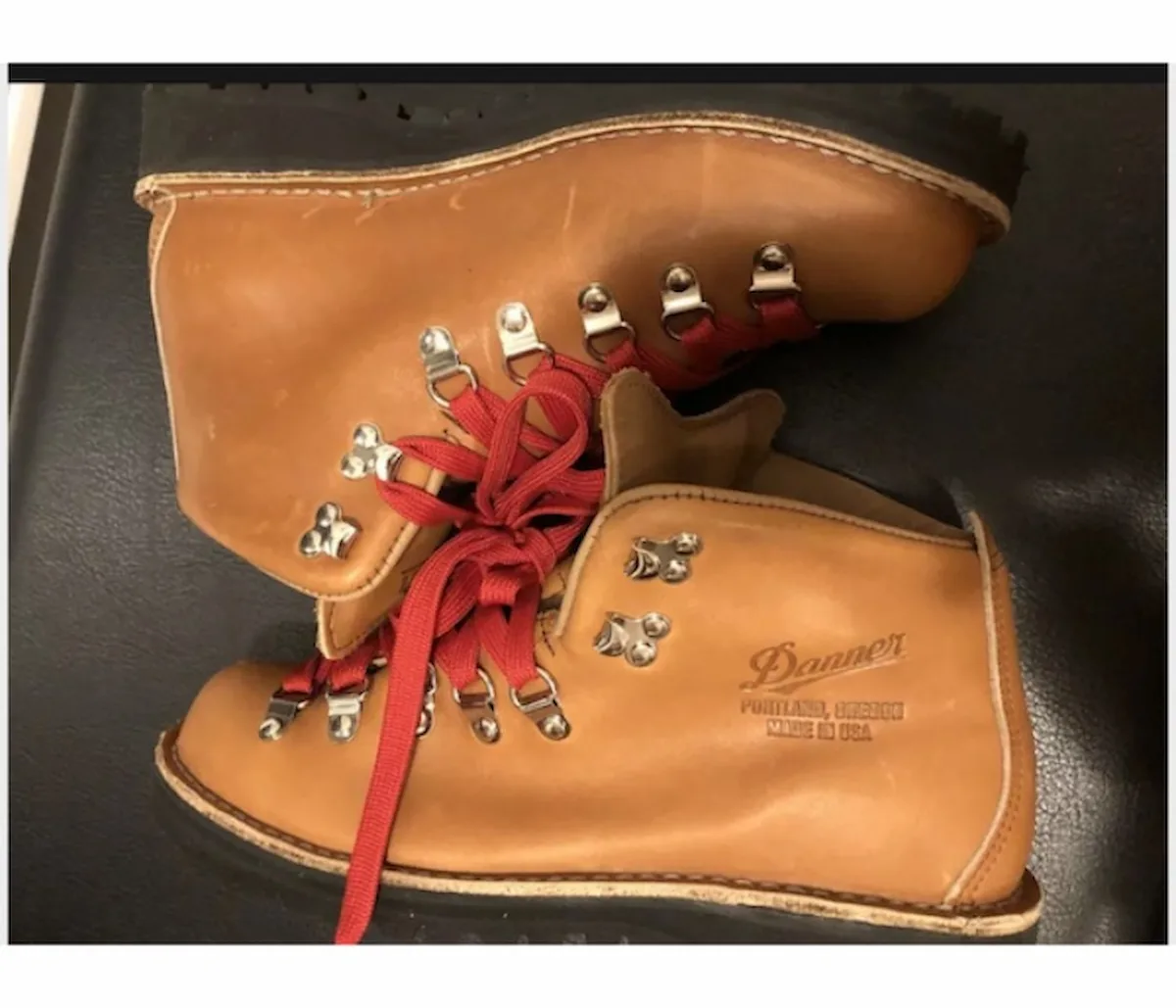
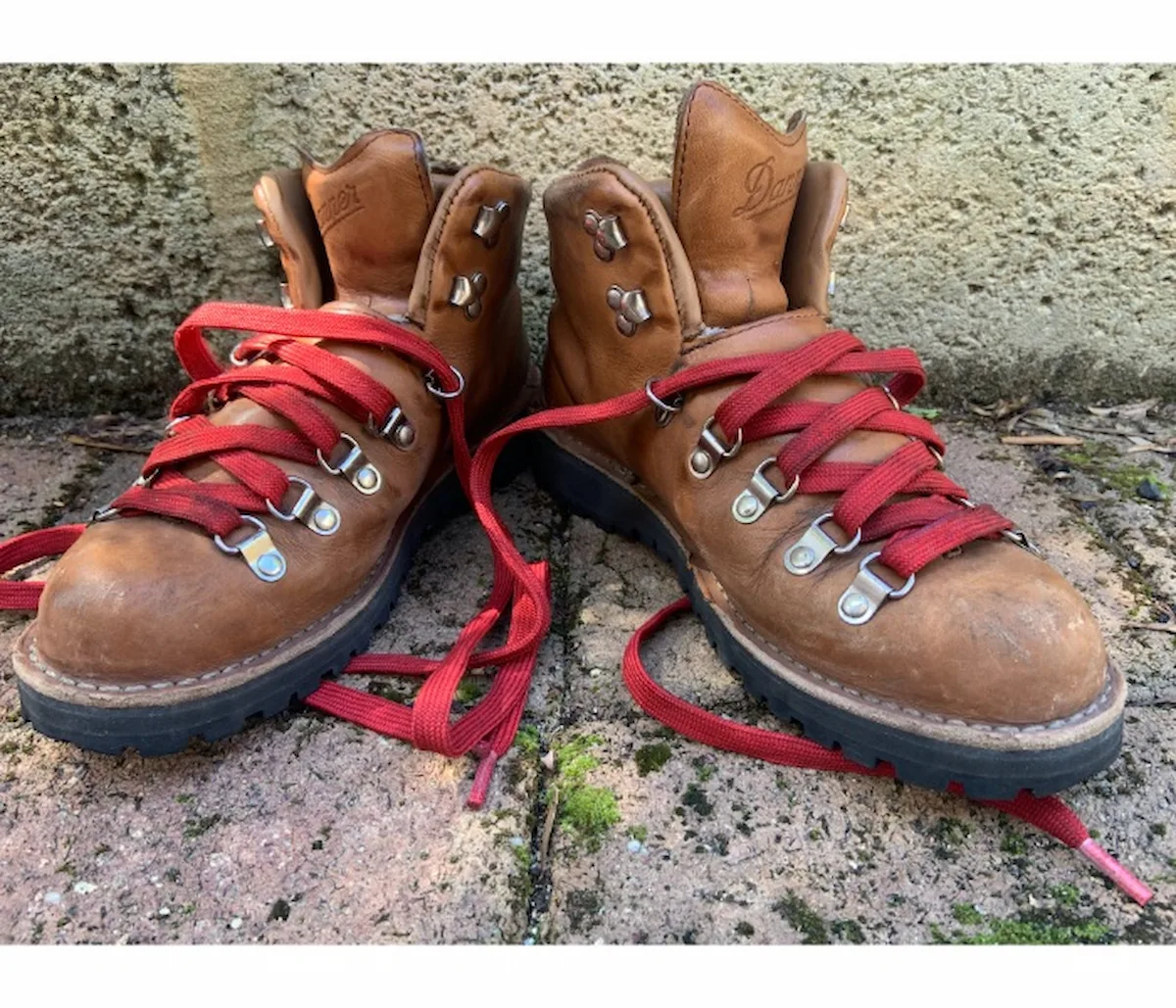
The retro tan leather hiking boots with the iconic red laces have been put on the map since Rees Witherspoon donned an ill-fitting pair in the film, ‘Wild’ based on the incredible memoir by Cheryl Strayed. But how good are Danner boots? The hiking trail is the last place you’ll find me opting for style over substance, but must the two be mutually exclusive? I bought a pair to find out.
Table of Contents
Summary
- Price: ~$440 USD / ~$680 AUD
- Made in: Portland, Oregon, USA
- Upper: Single-piece full-grain leather
- Construction: Stitch-down, resoleable through Danner’s recrafting service
- Waterproofing: Gore-Tex lined version only
- Break-in period: Allow 6+ months before a multi-day hike
Best for: Year-round hikers who wear boots regularly, those wanting boots to wear on and off the hiking trail, buyers prioritising longevity and repairability, those in cooler climates.
Not recommended for: Occasional hikers, wide feet, those needing strong ankle support, ultralight hikers, anyone needing trail-ready boots quickly
How good are Danner boots? Bottom line: they are a premium lifestyle and hiking boot built to last decades. Worth every cent if you’ll wear them constantly, but harder to justify if you won’t.
Danner Mountain Light : The Hollywood origins
During production of the movie, ‘Wild‘ starring Rees Witherspoon, based on the incredible memoir by Cheryl Strayed, Danner was approached to create a hiking boot that reflected the artwork used on the original book cover. But in a case of art imitating life, the Danner Mountain Light boots aren’t the ones worn by Strayed on her formative trek back in the 90s. The publishing house selected the image of a worn-in boot from stock images. Then when adapting the memoir, producers of the film approached Danner to request they create a boot for the film to tie in with the book cover.
Danner Mountain Light was the result and a nod to a style they manufactured in the 1970’s. But regardless of it’s Hollywood origins, the film proved to be the perfect marketing vehicle & now the Danner Mountain Light is here to stay. But before you rush out and buy a pair, how good are Danner boots?
Read more: The Oregonian discusses how the movie ‘Wild’ and Danner boots developed the Mountain Light.
Danner – The Company
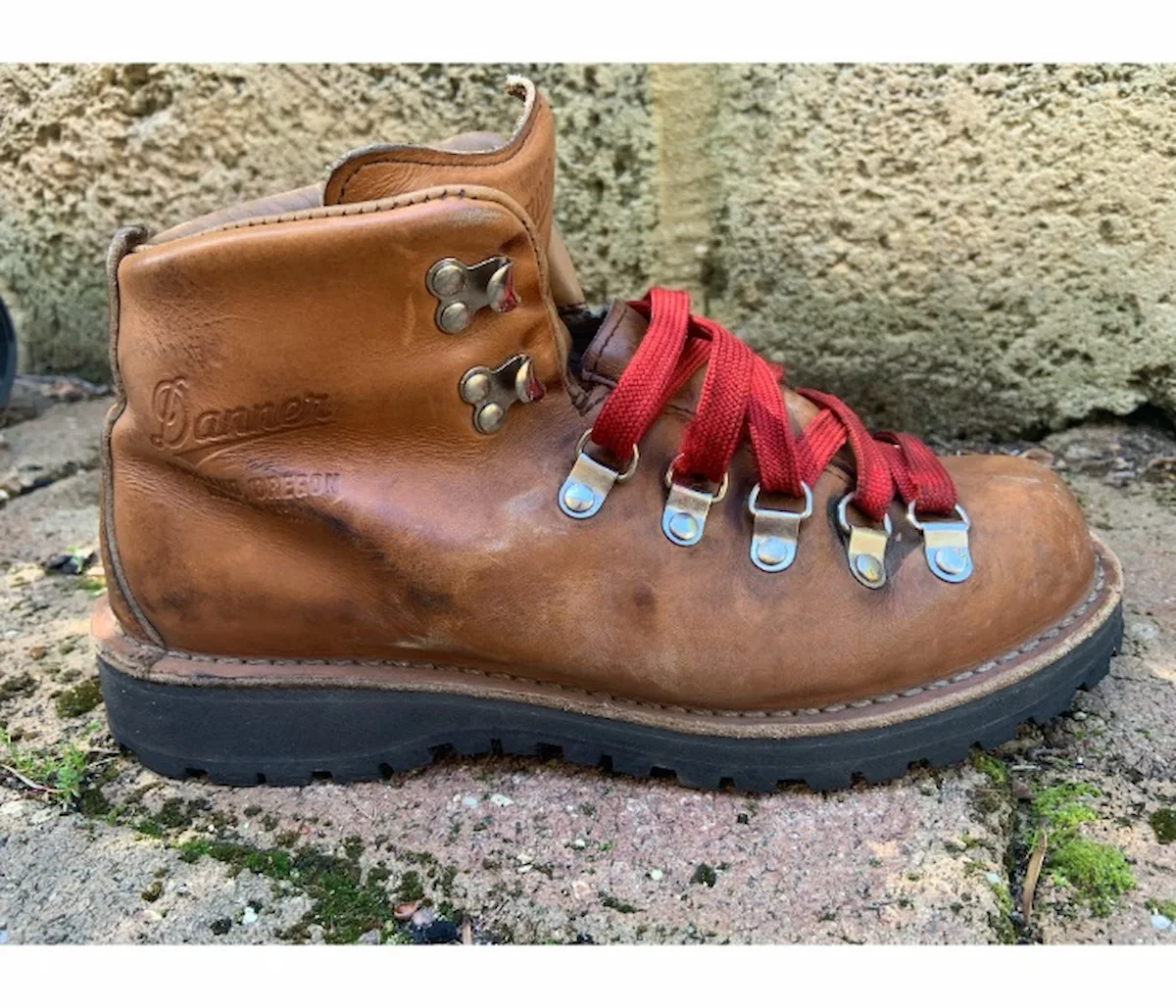
Danner are a boot-maker located in Portland, Oregon who have been crafting boots since 1932. They are a company committed to creating quality boots. While the Mountain Light gained a following recently after the release of the film ‘Wild‘, they make boots to suit all outdoor pursuits.
How good are Danner boots for hiking and as a lifestyle boot? If you are in the market for a boot exclusively for thru-hiking, perhaps consider other boots that offer more ankle support. I have written a lengthy review about how the Danner Mountain Light boots fare as genuine hiking boots, including sizing, the break-in process and the pros and cons of this boot on a multi-day hiking treks.
Read on: Danner Mountain Light Review: Everything you need to know.
I originally purchased the Danner Mountain Light boots to be worn on multi day treks. While they were up to the task, they aren’t the best on the market if this is all you’re looking for in a hiking boot. But for someone who wants a high quality boot to wear in the great outdoors, the Danner Mountain Light are perfect. But, there are a few things you should consider.
Price
There’s no softening this: the Danner Mountain Light is an expensive boot. At around $440 USD, it sits at the premium end of the market and above what most people would consider spending on hiking boots. So the question worth asking isn’t whether they’re expensive (they clearly are) but whether the price reflects genuine value and a higher quality item or whether you’re partly paying for a cultural trend. The honest answer is both, and knowing which matters more to you is key to deciding whether these boots are right for you.
On pure hiking performance, you can buy capable, comfortable boots for significantly less. The Scarpa Terra GTX comes in around half the price, breaks in faster, and will handle most hiking terrain competently. If trail performance on a budget is your priority, there are other boots that will better meet your needs.
But the Danner Mountain Light isn’t competing purely on trail performance. It’s competing on longevity, repairability and versatility. Most hiking boots aren’t built to last. The glued soles separate after a few years, the synthetic materials degrade, and while sole replacement is sometimes an option, it’s not usually cost effective when you consider the price of a replacement pair. The Danner Mountain Light’s stitch-down construction means the sole can be completely replaced through Danner’s recrafting service for a fraction of the cost of a new boot. A boot you wear for a decade or more at $440 has a lower cost per wear than a $220 boot replaced every three years.
The lifestyle dimension adds another layer to the value equation. These are boots you are more likely to wear off the trail, and wouldn’t look out of place at the farmers market, walking the dog, or on the school run. But if you’re buying purely for the trail and the boots will live in a cupboard for months between hikes, you can find better value elsewhere. If you love them enough to wear them year in year out. Then the cost per wear will balance out as the high price reflects genuine quality.
There’s a theory, articulated beautifully by Terry Pratchett in his Discworld novels, that a wealthy person ultimately spends less on boots over a lifetime than a poor one because they can afford to pay for better quality, while someone with less to spend buys cheap boots that fall apart and must be replaced repeatedly. The total cost of a decade of cheap boots far exceeds the cost of one good pair bought once. It’s a simple idea, but it reframes the way you think about expensive footwear entirely. The Danner Mountain Light, with its resoleable construction and full-grain leather that improves with age, is exactly the kind of boot Pratchett had in mind.
Quality: what does $440 actually buy you?
The quality of the Danner Mountain Light is not a marketing claim, it’s immediately apparent when you pick the boots up for the first time. They feel substantial in a way that synthetic hiking boots simply don’t. The leather is thick, the stitching is dense and even, and the overall construction makes this boot stand apart as a product built to high standards. For people asking how good are Danner boots, the answer lies in the quality.
The upper is cut from a single piece of full-grain leather. This single-piece construction eliminates the seams and joins that are the most common failure points in leather footwear. Put simply, there are less weak spots for the boot to fail. After four years of regular use on hiking trails and in everyday wear, the leather on my pair has developed a rich patina and shows no signs of structural weakness. That’s significant when most boots show significant wear within two years.
The Vibram Kletterlift outsole provides reliable grip across the terrain types most hikers encounter, rocky trails, wet roots, loose gravel and compacted earth. It’s not a specialist climbing sole but it handles everything a multi-day hiker is likely to face with ease. The stitch-down welt construction that attaches the sole to the upper is the detail that most distinguishes this boot from its competitors at a technical level. Where most boots use direct-attach or cement construction, essentially gluing the sole on, the stitch-down welt uses stitching through a leather rand that wraps the perimeter of the boot. This is both stronger and, crucially, repairable.
Danner’s Portland factory has been making boots since 1932 and the Mountain Light is made in the same facility today. In a market where almost every footwear brand has moved production offshore, that’s a meaningful commitment to quality control and gives buyers more confidence in the brands reputation. The people making these boots are specialists, not generalists on an assembly line producing dozens of different products. It shows in the consistency of the finished product.
The one honest quality criticism is the flat red laces. They’re distinctive and part of the boot’s identity, but they frayed noticeably after one thru-hike on rough terrain. For hiking on rough and rocky terrain, swapping them for round laces before you set off is worth considering.
Break-in Period
Every review of the Danner Mountain Light mentions the break-in period. Most describe it as brutal and leave it there. What fewer people address is why the break-in is so demanding, and what to expect at each stage, which is the information that would have been most useful to me before I bought mine.
The break-in period is demanding because full-grain leather at this thickness genuinely needs time and body heat to soften and mould. This isn’t a flaw in the boot, it’s directly linked to the higher quality leather. Thinner, softer leather would break in faster and feel immediately comfortable, but it would also wear faster, provide less support, and age less gracefully. The discomfort and inconvenience during the break-in is the price you pay for a boot built to last decades.
Here’s what the process actually looks like in practice:
Weeks 1-2: around the house and short walks. The boots will feel stiff and unyielding. Wear them for an hour at a time around the house, letting your body heat begin the softening process. You won’t experience major pain at this stage but don’t be deceived, they are nowhere near ready for a hike. Going slowly here avoids blisters which will slow down the overall break-in time.
Weeks 3-6: short walks outdoors. The leather will begin to crease at the flex points. This is a good sign. The ankle cup is the firmest part of the boot and will dig into your heel, which can be quite uncomfortable at best, but for some, it’s very painful. Compeed blister plasters on your heels are not optional, they’re essential. Wear two pairs of socks to reduce friction and keep it short (under one hour).
Weeks 6-12: longer walks and light day hikes. The heel cup begins to soften and the worst of the ankle pain subsides. You can now lace the boots fully without significant pain. Switch to the surgeon’s knot lacing technique at this stage to lock your heel in place and reduce slippage. You’ll still feel the boots on longer walks but the discomfort is now manageable rather than punishing.
Months 3-6: the boots begin to feel like your own. The leather has moulded to the shape of your foot and the boots start to feel like they were made for you. This is when most people understand why others are so devoted to this boot. The support and structure that made early wear difficult now feels tailored.
One thing that accelerated the softening process was wearing the boots in rain. Water softens full-grain leather temporarily and walking in wet boots encourages them to mould more quickly. Don’t avoid puddles during the break-in period, embrace them.
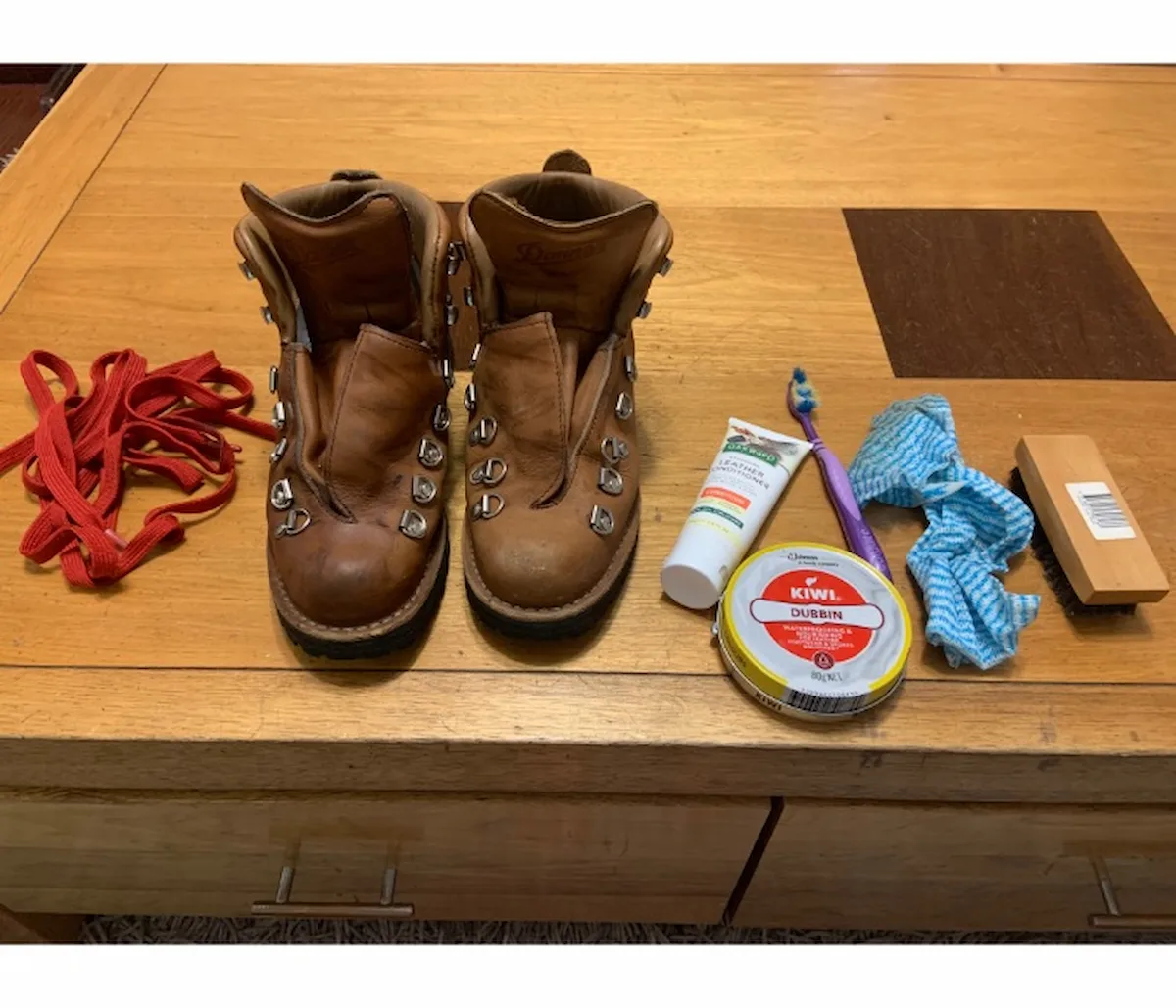
My recommendation: allow a minimum of six months before wearing these boots on a trek. Four months is possible if you’re committed to daily wear, but it’s a push. These boots are not a good impulse buy. If they are on your wish list, aim to buy them the season before you need them.
Who are Danner boots for?
How good are Danner boots? It depends, the Danner Mountain Light suits a specific buyer and it’s worth being honest about that before you invest. If you have an active outdoor lifestyle, wear your boots regularly year-round, value quality over convenience, and are prepared to invest several months in the break-in process, these boots will reward you generously and likely outlast every other pair of shoes you own. They’re equally at home on a six-day thru-hike and a winter weekend in the city, which is a rare combination.
Before you take the plunge and invest. How good are Danner boots? Occasional hikers, those with wide feet, anyone needing strong ankle support, or anyone who needs new boots in a hurry may be better served elsewhere. If you recognise yourself in that second group, there are better options at a lower price point, and the Danner Mountain Light will only frustrate you. Don’t jump on the bandwagon without properly considering how these boots are going to fit into your lifestyle and existing wardrobe. The expense and lengthy break-in period means these are not shoes to impulse buy.
How good are Danner boots for you & did they live up to the hype?
Frequently asked questions
How good are Danner boots and are they worth the money?
Yes, if you’ll wear them regularly. At around $440 USD, the Danner Mountain Lights are expensive, but the stitch-down construction means the sole can be fully replaced through Danner’s recrafting service, making the cost per wear competitive with cheaper boots that need replacing every few years. If they’ll sit in a cupboard between occasional hikes, you can find better value elsewhere.
What film made Danner boots famous?
The Danner Mountain Light rose to mainstream popularity after featuring in the 2014 film Wild, starring Reese Witherspoon, based on the memoir by Cheryl Strayed.
How long does it take to break in Danner Mountain Light boots?
Allow a minimum of six months of regular wear before taking them on a multi-day hike. These are not boots to buy a few weeks before a big trek.
Do Danner boots get more comfortable over time?
Yes, definitely. You’ll have to dedicate the first few months to breaking them in. But after about 6 months, the leather has moulded to the shape of your foot and the boots begin to feel like a second skin. Most long-term owners say this is when start to understand the hype.
What are Danner Mountain Light boots made of?
The upper is cut from a single piece of full-grain leather. This eliminates the seams most commonly responsible for boot failure. The sole is a Vibram Kletterlift outsole, attached using stitch-down welt construction rather than glue.
Are Danner boots waterproof?
Waterproofing is only available in the Gore-Tex lined version. The standard version is not waterproof, though full-grain leather does offer some natural weather resistance. If waterproofing is a priority, go with the Gore-Tex version.
Can Danner Mountain Light boots be resoled?
Yes. The stitch-down welt construction means the sole can be completely replaced through Danner’s recrafting service in Portland. This is one of the key features that separates the Mountain Light from most other hiking boots.
Are Danner boots good for wide feet?
No, they are not recommended for wide feet. The Mountain Light runs narrow and those with wider feet often find them uncomfortably tight even after the break-in period.
Are Danner boots good for thru-hiking?
They wouldn’t be my first choice. They offer moderate ankle support and are on the heavier side. Ultra-light hikers may prefer lighter boots.
What laces do Danner Mountain Light boots come with?
They come with the iconic flat red laces that are part of the boot’s identity. However, these laces can fray on rough terrain. Swapping them for round, more durable laces before a thru-hike is worth considering.