Tokyo Disneyland Disability Access: The Inclusive Disney alternative in 2026
If you’ve been following the news about changes to Disney’s disability access programs recently, you may be questioning whether a Disney holiday is the right choice for your family. The frustration is real and families are justifiably disappointed. If your heart is set on visiting the happiest place on earth, you’ll be interested to learn that Tokyo Disneyland disability access inclusion policies are not the same as US Disney parks. And in 2026, that difference has never mattered more. Tokyo Disney disability inclusion policy remains one of the most genuinely inclusive theme park destinations in the world.
Tokyo Disneyland Disability Access at a glance
- Service name: Disability Access Service (DAS)
- Registration: In person at your first ride, no pre-trip video call required
- Support needs: Developmental, neurological, sensory and physical disabilities
- Stroller as wheelchair: Available on request
- Parks covered: Tokyo Disneyland and Tokyo DisneySea
- Important: Tokyo Disney is independently operated by Oriental Land Company. US Disney DAS policy changes do not apply here
Documentation accepted (originals only — no copies or scans):
- Australia: NDIS letter or Disability Services Commission certificate
- USA/Canada: state handicap card, doctor’s letter or diagnosis paperwork
- UK: PIP award letter, blue badge or GP letter
- All International visitors: Japanese translation recommended to speed up the process
Top tips:
- Prepare a translated Japanese note before you leave home
- Book tickets in advance- the parks sell out
- Buy a monorail day pass to return to your hotel for rest breaks
- Avoid Golden Week (late April), the busiest period of the year
- Safety questions are repeated at each individual ride (this is normal)
US Disney parks vs Tokyo Disneyland disability access
In 2024, US Disney theme parks changed their Disability Access Service (DAS) program indicating it was primarily for guests with developmental conditions like autism, attracting criticism from guests with physical disabilities who also struggle to stand in lines. The controversy went beyond the wording. Visitors to US parks, must now pre-register for the DAS online via video call with a cast member. While guests at Tokyo Disneyland and DisneySea will continue to register in person upon arrival at their first ride.
Reasons for the change are cited as historic misuse of the program and the response has been a tightening of eligibility criteria. But for neurodivergent families and individuals, the prospect of a mandatory video interview has been distressing for many. Having to explain personal details about their disability in order to justify support needs, feels like a punishment to the very people the service was set up to support and it hardly sets the tone for a fun holiday.
Tokyo Disneyland and Tokyo DisneySea is run by the Oriental Land Company and operates completely independently. While they have full creative input from Disney, they are the only Disney-based theme parks not owned in whole or in part by The Walt Disney Company. This allows them to set their own accessibility policies, which have remained inclusive and straightforward. At Tokyo Disney, both physical and developmental disabilities are covered under the Disability Access Service and registration is in person at the park. Simply show your documentation to a staff member where they assesses your needs face to face, and the appropriate supports are arranged. It is a dignified process that assumes you need help rather than asking you to prove it.
How Tokyo Disneyland’s Disability Access Service works in 2026
The Disability Access Service (DAS) assists guests who have difficulty waiting in queues due to neurological, developmental, sensory or physical disabilities. Here is how it works in practice:
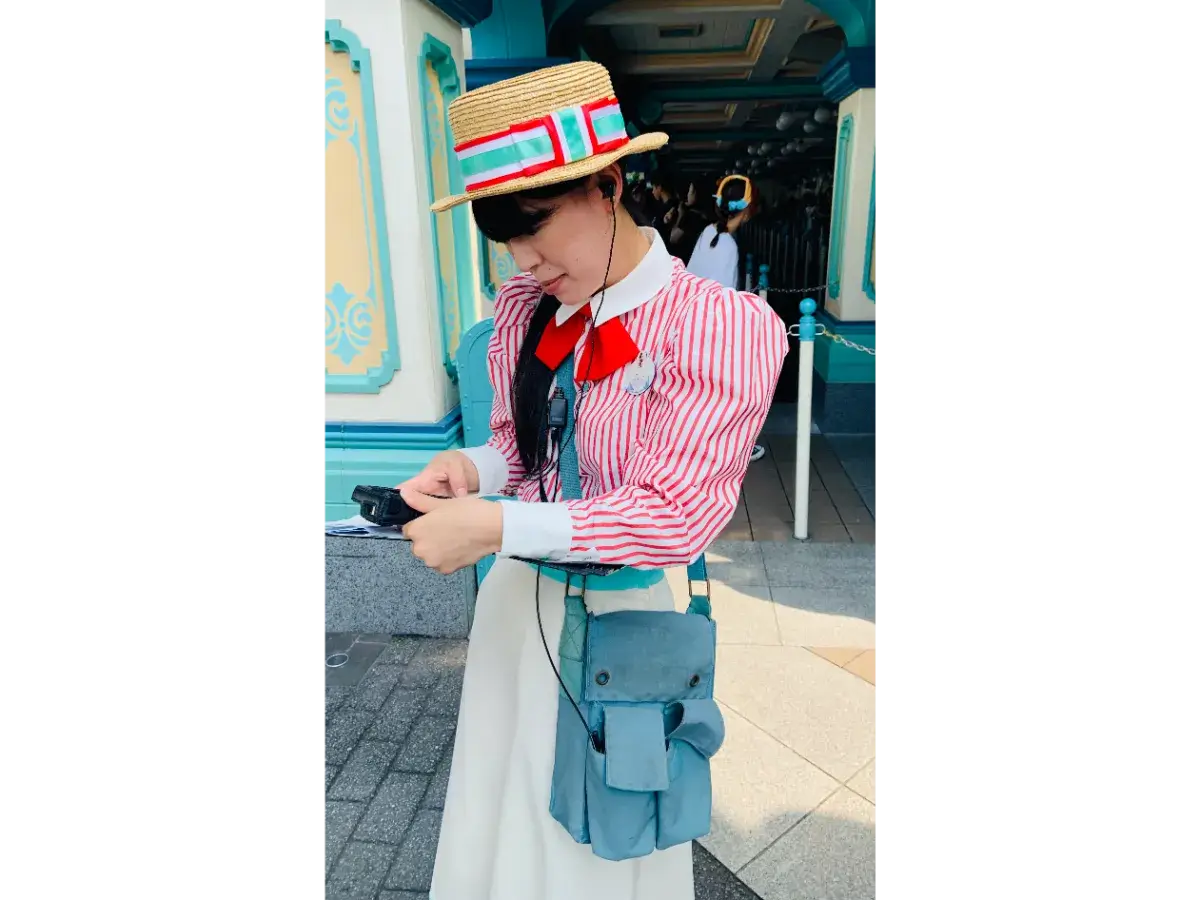
Registration happens at your first ride. At the first attraction you want to visit, locate a cast member and they will process your DAS there and then. Guest Relations desks at Disneyland (Main Street House) and DisneySea are available for more complex needs and those seeking broader assistance.
You will be given a return time. Once your DAS is activated at a ride, you are given a return time that matches the current standby wait. You cannot return early, and returning more than ten minutes after your allocated time means losing your spot, though you won’t need to redo the full registration process.
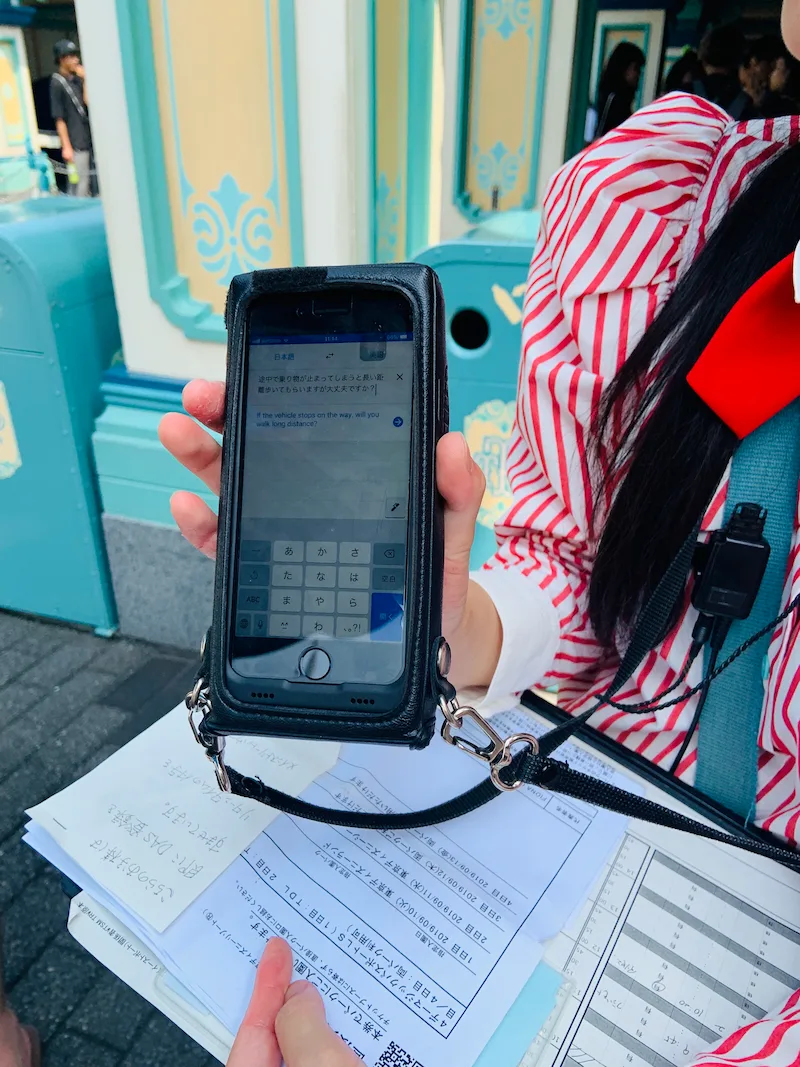
Safety questions are asked at each ride. At each attraction, cast members will ask you specific questions to ensure your ability to ride safely, such as, whether you can sit independently, bend at the knee, and navigate evacuation routes in the event of an emergency. Text translation devices are used for international guests to navigate any language barriers. This can feel a little repetitive but is done respectfully.
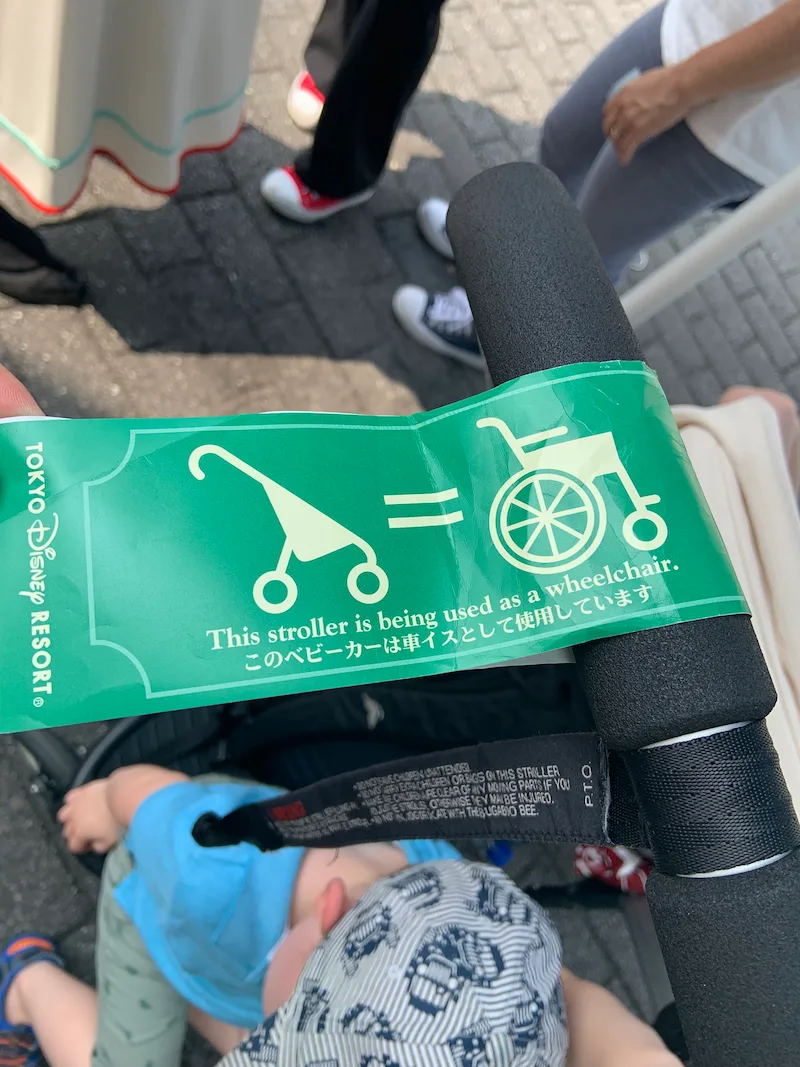
The stroller as wheelchair option remains available. If your child uses a stroller as a mobility aid, you can request a sticker from staff to indicate this. This can be particularly useful at both parks for reducing time on foot between rides or to offer some privacy if crowds are the source of sensory overwhelm.
There is a separate service for temporary conditions. The Separate Wait Service covers guests with temporary conditions such as broken legs, pregnancy, or recent surgery. Under this service, the guest with a temporary condition waits separately while the rest of the party queues normally.
Documentation: what to bring as an international visitor
This is often an area that causes the most anxiety for international visitors and it is worth addressing clearly. Officially, Tokyo Disneyland disability access website states the service is available to guests holding certificates issued by the local government of Japan. International guests are asked to present a certificate equivalent to those issued in Japan. In practice, what this means for international visitors varies.
Australian visitors can use documentation issued by the NDIS, the Disability Services Commission, or an equivalent state-based government authority. Be aware, that only original documents are accepted and copies or scans are insufficient.
US and Canadian visitors: some visitors have successfully used a state-issued handicap card or transit support card for disabled persons, while others have brought a doctor’s letter or diagnosis paperwork. A translated Japanese summary of the diagnosis may help to speed up the process.
UK visitors: a PIP award letter, blue badge, or GP letter confirming the disability have all been accepted by international visitors according to recent forum discussions.
The golden rule is to bring the most official documentation you have, bring the originals, and if possible have a Japanese translation prepared in advance. We used a translated note during our visit for communicating with individual ride staff and it made a huge difference to how smoothly the day ran.
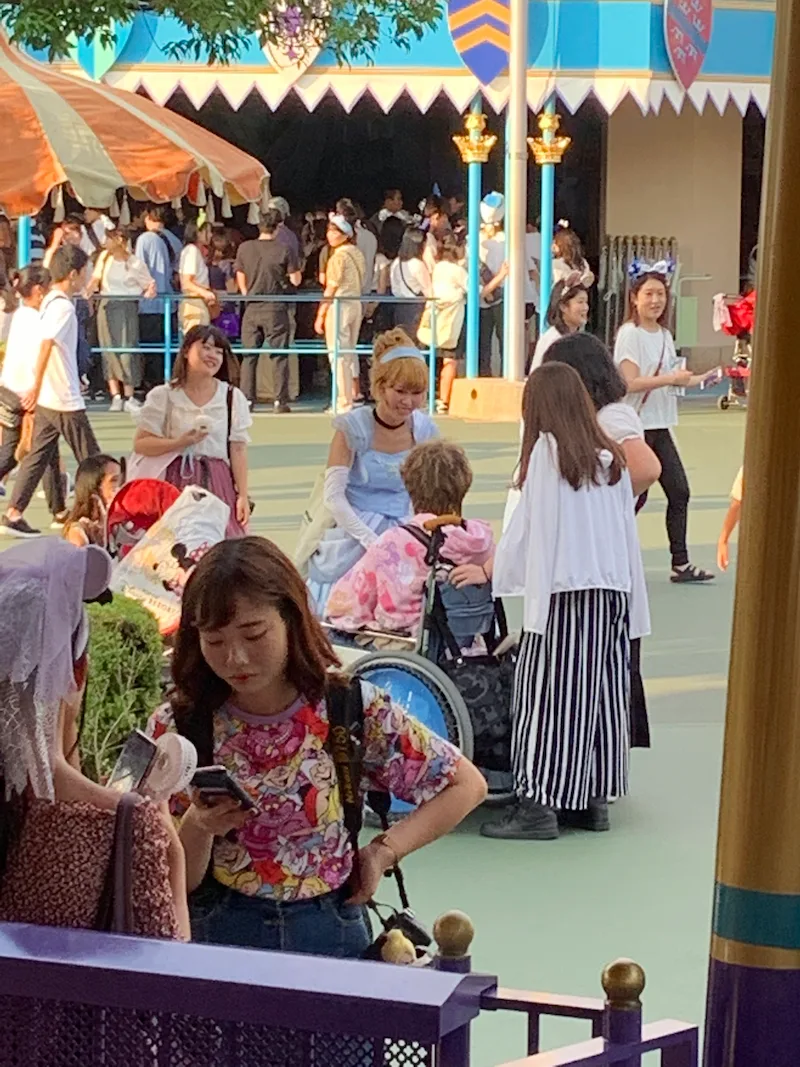
Tokyo Disneyland Disability Access & DisneySea
Both parks offer meaningful but different experiences for families and people with disabilities.
Tokyo Disneyland is the more straightforward of the two for accessibility. The majority of attractions can be reached without stairs, accessible bathrooms are available throughout the park, and the layout is open and relatively easy to navigate with a stroller or wheelchair and there are plenty of benches and rest areas.
Tokyo DisneySea is widely considered one of the most beautiful theme parks in the world and is worth visiting but requires more planning for families and people with disabilities. It is wheelchair accessible in terms of transportation, pathways, restrooms and seating, however ride accessibility is more limited due to strict safety and evacuation requirements, which may prevent some wheelchair users from boarding certain attractions.
The park is built around water with parades taking place on boats, and the immersive themed worlds from Venice to an undersea Mermaid Lagoon which are extraordinary to experience without riding every attraction. For families where a child’s disability primarily impacts their capacity to wait in queues, rather than physical access, DisneySea is absolutely manageable and memorable.
Getting there: the Disney Resort Line monorail
The Disney Resort Line monorail is accessible, with cast members ready to assist at stations and portable ramps available to bridge the gap between platform and monorail for wheelchair users. The monorail loops four stations: Disneyland, DisneySea, Resort Gateway Station and Bayside Station, making it easy to travel between parks and return to your hotel for rest breaks during the day. For this reason a day pass is worthwhile.
Where to stay
Tokyo Disneyland Hotel sits just outside the park entrance and is the most convenient option if proximity is your priority. Disney hotel guests also benefit from early park entry, 15 minutes before general opening, which can allow you to settle in before the largest crowds arrive. For those with sensory sensitivies, the quieter transition can make a real difference to the day.
We stayed at the Hilton Tokyo Bay, one of several hotels in the Maihama area connected to the parks via the Disney Resort Line monorail and free shuttle buses. It worked well for us and offered more space and value than the on-site Disney hotel. Other accessible hotel options in the area include the Mitsui Garden Hotel PRANA Tokyo Bay, which have a free shuttle to the park.
Practical tips for families with disabilities
A few things we learned that don’t appear in official park guides:
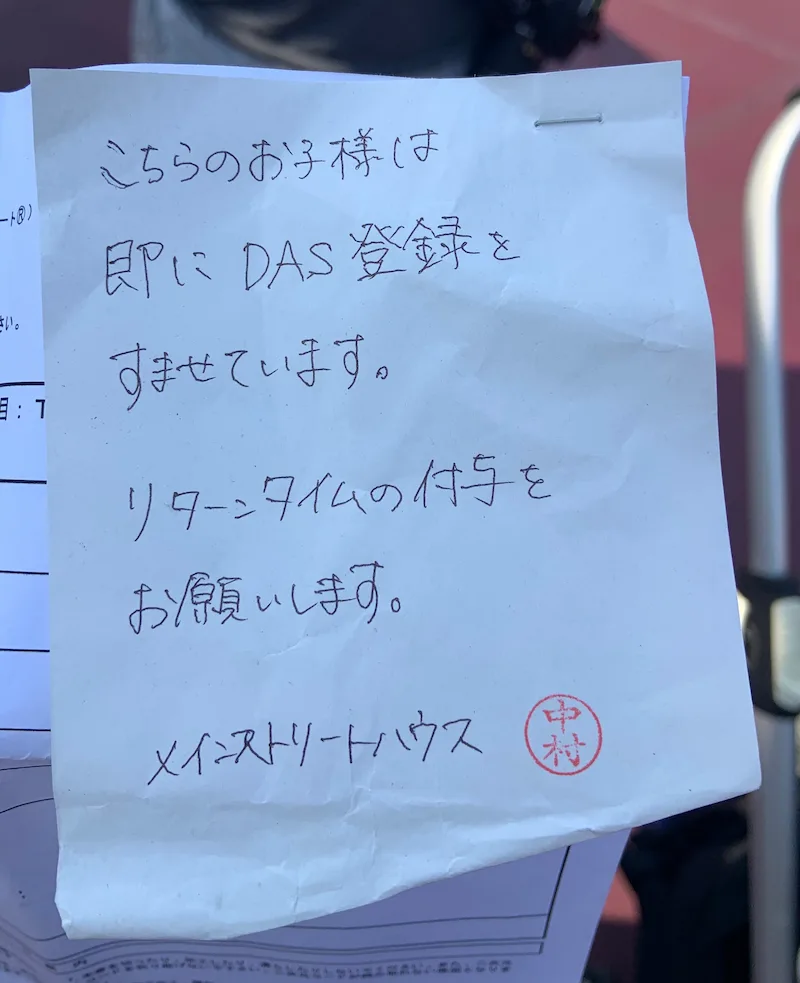
Prepare a translated note. When we struggled with the language barrier at individual rides, we returned to the Main Street House and asked a staff member to write us a note in Japanese explaining that we had a DAS and needed a return time. Handing this note to ride staff eliminated every communication problem we had for the rest of the day. Consider having this prepared in advance either ask a Japanese speaker to help you write it, or use a translation app to produce a printed note before you leave home.
Plan for sensory breaks. The parks are busy and loud, particularly during Japanese school holidays and Golden Week in late April. Be proactive and identify quiet zones on the park map before you arrive and build rest time into your day. The monorail back to your hotel is always an option.
Start with shorter queue rides. Spend your first hour in the park on rides with naturally short queues (carousels, slower attractions, parade viewing) to settle in before using the DAS for longer wait attractions.
Book tickets in advance. Tokyo Disney parks are extremely popular and tickets can sell out. Waiting until you arrive risks finding the park at capacity, which would be particularly disappointing for those who have travelled a long distance and planned carefully around accessibility needs. The official Tokyo Disney Resort website sells tickets, as do authorised third-party resellers and convenience stores throughout Japan. But I recommend booking at the same times as your flights and accommodation.
Does Tokyo Disneyland disability access offer genuine inclusion for people with disabilities?
Yes, and in 2026 more so than ever. At a time when many are questioning whether Disney parks still welcome them, Tokyo stands apart. The system is not perfect, the language barrier is real, there’s no avoiding the crowds, and the documentation requirements for international visitors could be clearer. But the fundamental values, that guests with disabilities deserve to enjoy the park equally, remains intact.
If you found this helpful, you may also enjoy a detailed guide to using the Tokyo Disneyland Disability Access Service, which covers the day-to-day practicalities of the DAS in detail.